What Tourists Need to Know About Europe Wildfires Travel Updates
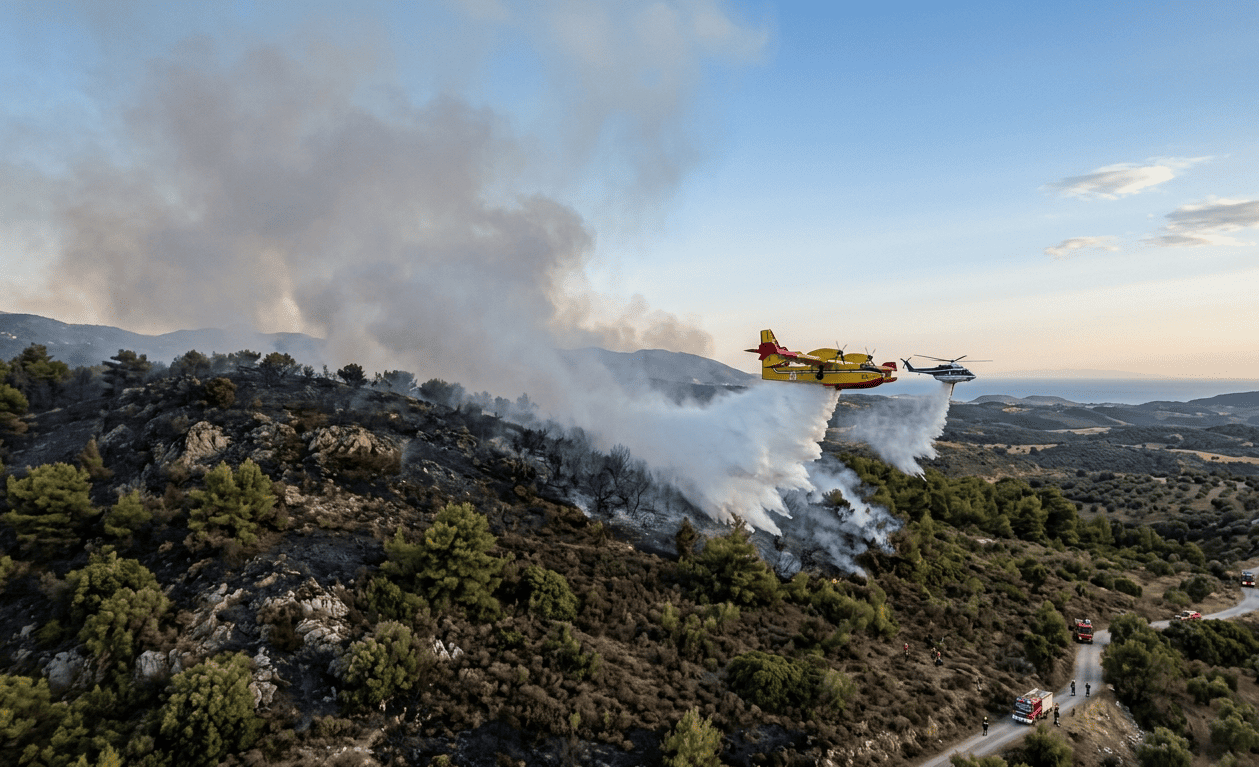
A surge in extreme heat and fast-moving wildfires across Southern and Western Europe has triggered emergency declarations, tourist evacuations, and updated travel advisories from global health and diplomatic agencies.
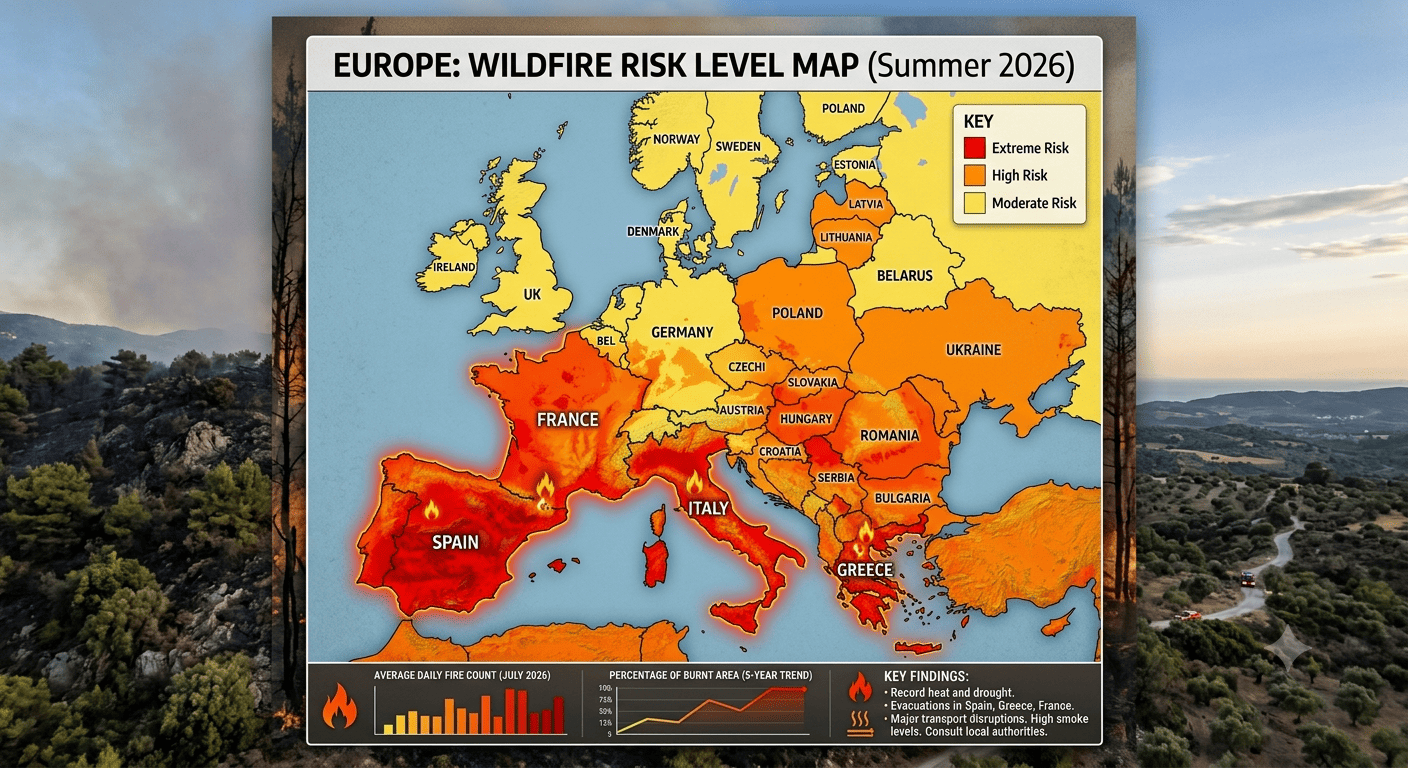
According to recent data from the World Health Organization (WHO) Europe, land burned across the region has climbed sharply over the past four years, driven by record-breaking summer heat domes and prolonged drought conditions. National authorities in Spain, France, Portugal, and Greece are battling active blazes while working to protect local communities and summer holidaymakers.
If you have an upcoming trip planned to Southern Europe, here is the essential situation breakdown, official advice, and step-by-step guidance on managing your bookings.
1. Current High-Risk Regions & Local Disruption
Wildfire activity is concentrated primarily across Southern and Western Europe, though extreme heat alerts extend into Central Europe.
Key Travel Disruptions to Expect:
- Adjusted Landmark Hours: Famous sites—such as outdoor monuments in Paris and Madrid—are adjusting operating hours during peak heat (11:00 AM to 4:00 PM) to safeguard visitors.
- Transit Slowdowns: Extreme heat can strain power grids and buckle railway tracks, prompting speed restrictions on high-speed rail lines across Spain, France, and Italy.
- Air Quality & Smoke: The WHO warns that wildfire smoke can travel hundreds of miles, causing respiratory irritation. Travelers with pre-existing conditions are advised to wear well-fitting protective masks (N95/FFP2) when visiting regions near active perimeters.
2. Live Tracking & Official Government Guidance
Conditions during wildfire season can evolve rapidly. Travelers should consult real-time monitoring tools rather than relying on social media rumors.
- Satellite Fire Tracking: Check the European Forest Fire Information System (EFFIS) map hosted by the European Commission for satellite-verified wildfire perimeters and daily fire danger danger rankings.
- Diplomatic Advisories: Review travel alerts from the UK Foreign, Commonwealth & Development Office (FCDO) or the US Department of State Travel Advisories for country-specific updates.
- National Weather Services: Monitor local agencies such as Spain’s AEMET (Agencia Estatal de Meteorología) or France’s Météo-France for extreme heat warnings.
3. Tour Rights, Insurance, and Cancellation Policies
A common source of confusion for travelers is whether a wildfire entitles them to a full refund.
- When Government Advisories Apply: If your government issues an advisory warning against all but essential travel to a specific municipality, package holiday operators are generally required to offer flexible rebooking or full cash refunds.
- When Travel Advisories Are Active Without Bans: If official advisories remain open (e.g., standard cautionary alerts without explicit travel bans), airlines and hotel providers operate under normal cancellation policies.
- Comprehensive Travel Insurance: Standard policies cover cancellations if your accommodation is physically damaged or rendered uninhabitable by a wildfire, or if emergency services order an evacuation. Pre-emptive cancellations made purely out of caution without official bans are rarely covered.
4. Practical Advice for Travelers in Affected Zones
If your holiday takes you near high-risk areas in Western or Southern Europe, adopt these heat- and fire-smart daily rhythms:
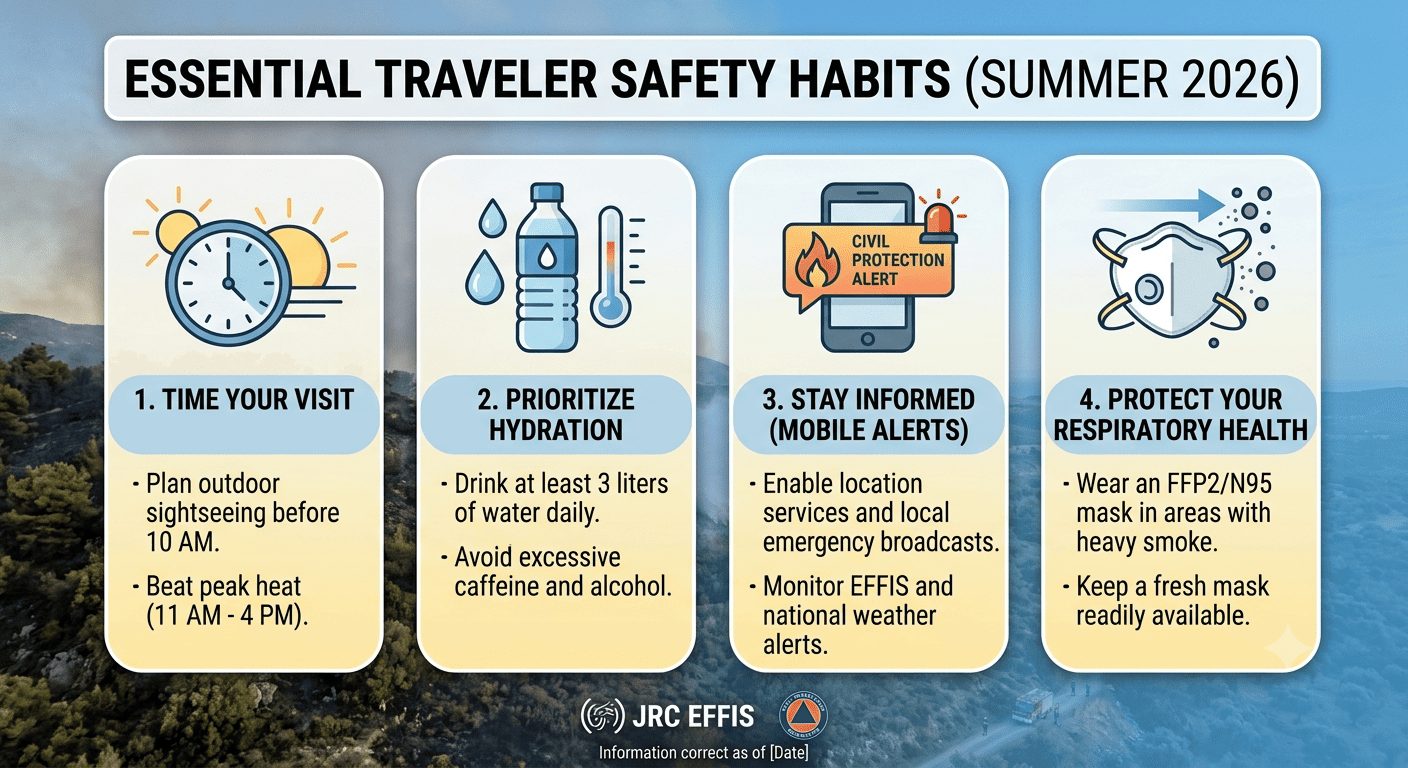
- Sightsee Early: Complete outdoor activities, hiking, or walking tours before 10:00 AM.
- Midday Indoors: Reserve the 11:00 AM – 4:00 PM block for air-conditioned indoor spaces like museums, galleries, or rest.
- Sign Up for Emergency Alerts: Ensure your mobile phone has roaming enabled and location services turned on to receive emergency alert broadcasts issued by national civil protection authorities.
- Keep Travel Documents Handy: Maintain digital and physical copies of passports, travel insurance details, and medical supplies in a single, quickly accessible bag.