United 737 MAX 9 and CRJ-200 Parallel Landing at SFO: Video & How It Works
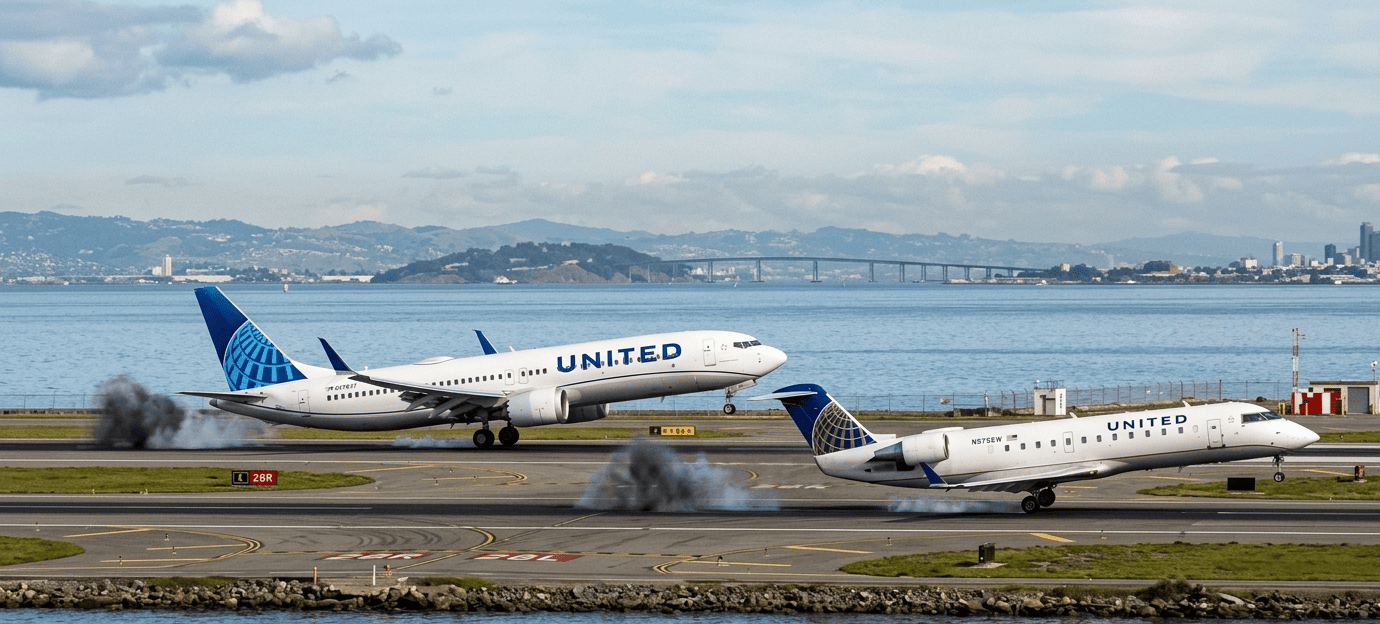
There’s something almost hypnotic about watching two airliners glide down from the clouds side-by-side, but this video takes that aviation magic to another level. Captured right along the San Francisco Bay shoreline, the footage shows a United Airlines Boeing 737 MAX 9 and a United Express CRJ-200 descending in absolute lockstep.
As the video opens, the two aircraft float over the low-tide mudflats toward San Francisco International Airport (SFO). Despite the dramatic scale difference—the massive 737 looming in the background while the agile CRJ-200 flies beside it—both aircraft match groundspeed and pitch, flaring over the threshold and touching down on parallel runways in perfect visual harmony. It’s an effortless display of flight coordination that showcases why aviation enthusiasts can’t get enough of Bay Area arrivals.
The Secret Behind SFO’s Synchronized Sky Ballet
If you’ve ever experienced one of these side-by-side landings firsthand, you know how thrilling it feels from the passenger seat. San Francisco International Airport is world-famous in aviation circles for its unique dual-runway setup. Its two primary arrival tracks—Runway 28L and Runway 28R—are positioned just 750 feet (230 meters) apart.
When clear weather and high visibility prevail over the bay, Air Traffic Control (ATC) routinely clears incoming flights for visual approaches. Under visual separation rules, flight crews maintain sight of the adjacent aircraft throughout their final approach descent:
- The Mainline Heavy hitter: Larger jets like the Boeing 737 MAX 9 line up on one runway track, holding a steady glide slope.
- The Regional Workhorse: Smaller jets like the Bombardier CRJ-200 glide in right alongside, locking into the parallel lane.
To learn more about how airfield geometry and Bay Area weather dictate daily arrival paths, explore the SFO Official Airport Runway Operations Guide.
David and Goliath: A Striking Contrast in Scale
What makes the footage above so captivating is the stark visual imbalance between the two jets sharing the same approach corridor:
- Boeing 737 MAX 9: Measuring over 138 feet (42 meters) long with a wingspan of nearly 118 feet (36 meters), this mainline twin-jet carries up to 193 passengers and demands substantial runway length and speed management.
- Bombardier CRJ-200: A sleek regional jet coming in at just 87 feet (26.8 meters) long with a 69-foot (21.2-meter) wingspan, designed for quick regional hops with around 50 seats.
Because smaller regional aircraft and larger mainline jets handle wake turbulence, weight, and airspeeds differently, seeing pilots adjust their approach parameters to touch down simultaneously is a true demonstration of airmanship.
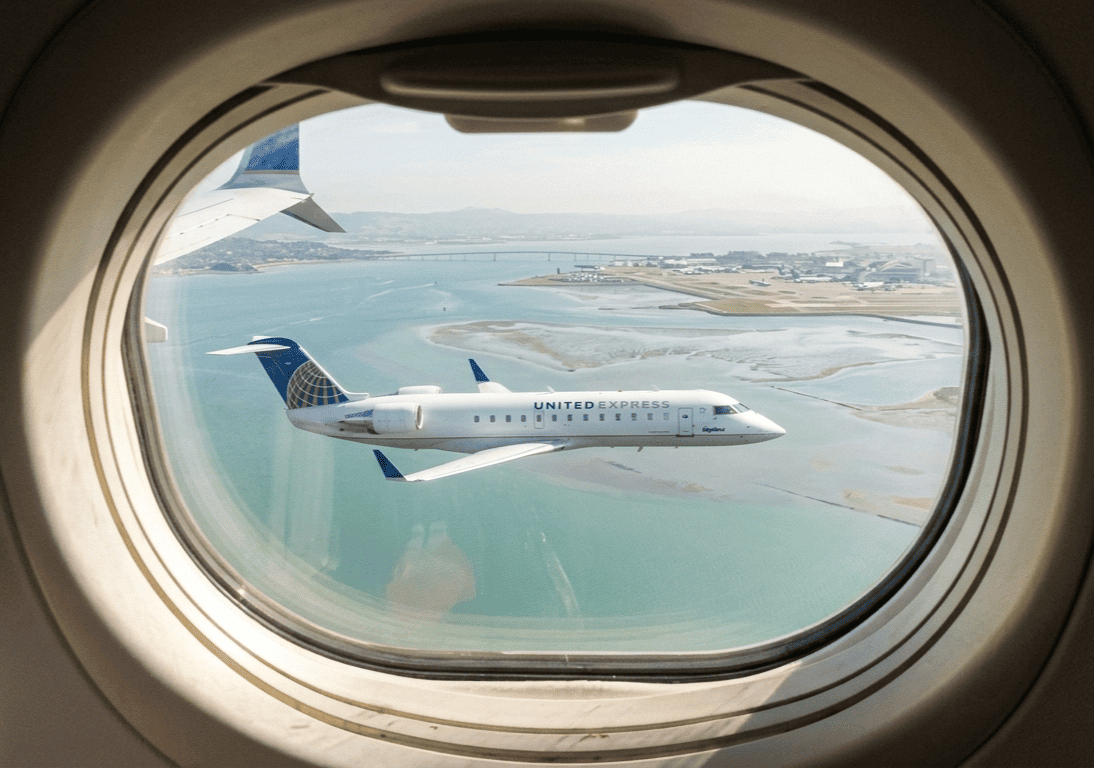
Pilot Insight: During visual parallel approaches, pilot focus is split between instrument monitoring and continuous visual contact with the nearby plane. Constant radio communication with ATC ensures both crews maintain safe separation all the way to the pavement.
For a deeper dive into the federal regulations governing visual flight and separation rules, visit the FAA Visual Approach Procedures.
Where to Spot Parallel Touchdowns Yourself
Want to record your own viral plane-spotting video or catch this view from your window seat? Here are the prime vantage points around SFO:
- In-Flight (Right-Side Window): Book a seat on the right side of an arriving flight (Seats A or F depending on the approach vector) coming into SFO from the south or east.
- Bayfront Park (Burlingame): Located just south of the airfield along the water, this public park gives you an unobstructed ground-level view of jets on short final over the bay.
- SFO SkyTerrace: Located on the top level of Terminal 2, this free observation deck provides a panoramic view of active operations across the entire runway complex.