
U.S. Inbound Tourism Drop 2026: Why Foreign Visitor Numbers Are Falling and What It Means for the Economy
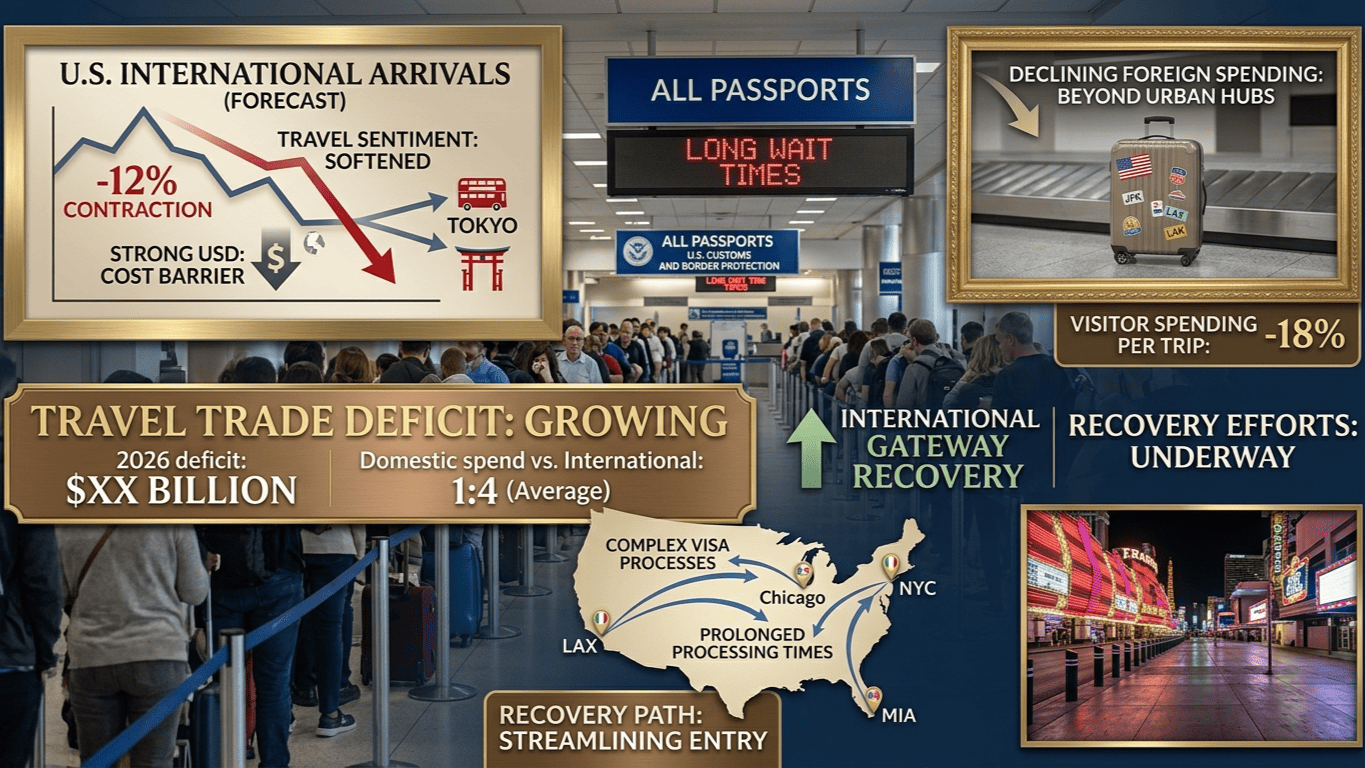
Inbound international tourism to the United States continues to face persistent headwinds, driven by a combination of high travel costs, a strong U.S. dollar, and tighter entry procedures. According to international inbound travel statistics, foreign tourist arrivals have shown a noticeable contraction, creating a growing travel trade deficit as international travelers look toward alternative global destinations.
Analyses from regional trade groups highlight that travel sentiment from major source markets in North America, Western Europe, and Asia has softened. Heightened entry requirements, complex visa application processes, and elevated hospitality costs across tier-one cities have combined to make domestic travel within Europe and Southeast Asia increasingly attractive by comparison. Travelers tracking visa application updates and requirements frequently encounter prolonged processing times, further influencing holiday planning away from American gateways.

Economic Impact and Industry Responses
The economic fallout from declining foreign visitation extends beyond major urban centers to impact hoteliers, regional airlines, and retail businesses. As detailed in ongoing coverage of us inbound tourism trends, international visitors spend significantly more per trip than domestic travelers, making the prolonged downturn a major concern for the hospitality sector.
To counter this trajectory, destination marketing organizations and travel associations are calling for targeted policy reforms. Recommended measures include streamlining entry protocols, expanding international promotional campaigns through public-private partnerships, and adjusting promotional messaging to highlight affordable options outside primary gateway cities.
Despite these challenges, recovery efforts are underway across global hospitality and tourism news channels as key stakeholders press for improved travel facilitation and streamlined processing at international gateways to restore competitiveness.