
Strong Winds and Staffing Constraints Trigger Flight Delays at Las Vegas Airport
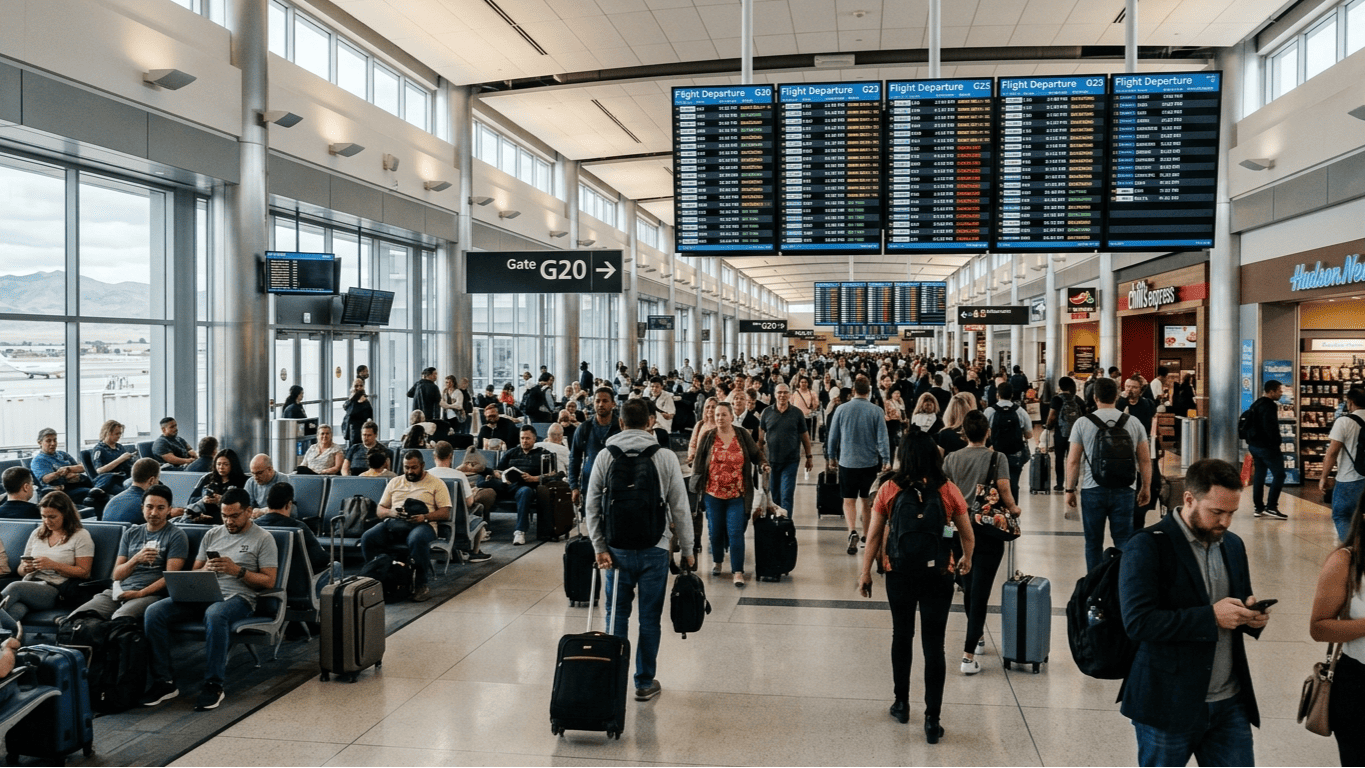
Travelers flying into Southern Nevada faced notable schedule disruptions today as federal air traffic managers initiated traffic flow programs at Harry Reid International Airport, causing arrival delays that averaged roughly 46 minutes. The operational slowdown comes as strong surface wind gusts across the Las Vegas valley combined with temporary air traffic control staffing constraints.
According to real-time status alerts published on the official FAA National Airspace System Portal, traffic management initiatives were put in place to manage flow density into the region. When desert wind conditions intensify, controllers increase spacing between incoming planes to guarantee safe landing margins, reducing the number of aircraft the airport can process per hour.
Operational Pressures and Weather Impact
Harry Reid International stands among the busiest single-runway-system hubs in North America. During periods of gusty crosswinds or turbulent mountain wave activity, visual landing approaches become restricted, forcing pilots and ground controllers onto instrument flight procedures that naturally widen aircraft separation.
Compounding the weather challenges, localized staffing management within regional air traffic control facilities restricted total airspace capacity. When staffing drops below standard operational thresholds during peak arrival waves, ground delay programs are routinely triggered at origin airports across the West Coast and major national hubs.
To track broader travel trends and regional airport updates across the United States, travelers often monitor news digests on travel platforms like RUS Tourism News.
Carrier Responses and Guidance for Travelers
The hold programs primarily impacted inbound flights coming from regional points like Los Angeles, Phoenix, and San Francisco, though several long-haul domestic flights experienced tarmac gate holds prior to takeoff.
Airlines operating high frequencies out of Las Vegas—including Southwest Airlines, Delta Air Lines, and Spirit Airlines—encouraged passengers to monitor flight statuses closely before heading to their departure gates. Passengers can check real-time gate changes, departure updates, and potential connecting adjustments directly through the FAA Flight Status Tracker.
Airport authorities emphasized that traffic management programs are standard safety measures designed to prevent airborne holding stacks above the Las Vegas valley during adverse weather. Operations are expected to stabilize as wind speeds diminish and air traffic staffing levels adjust into the evening hours.