
Singapore Launches New Green Levy on Air Tickets to Fund Sustainable Aviation Fuel
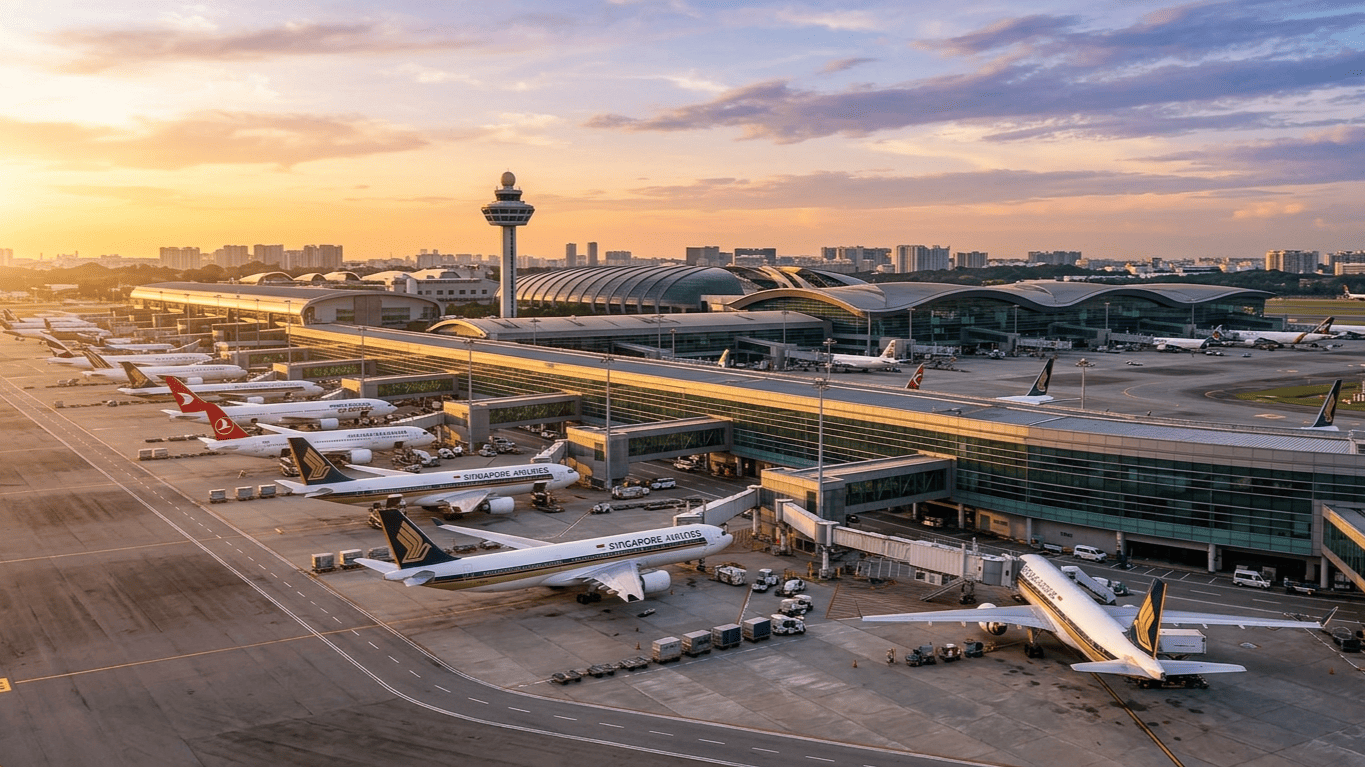
Air travel departing from Singapore Changi Airport now comes with an explicit green commitment attached. Under a landmark policy managed by the Civil Aviation Authority of Singapore (CAAS), travelers booking outbound flights will see a dedicated Sustainable Aviation Fuel (SAF) levy added directly to their airfare breakdown.
Changi Airport introduces a mandatory SAF levy on departing flights.
The new levy forms a cornerstone of Singapore’s Sustainable Air Hub Blueprint, which targets a 1% SAF mix target for 2027 before scaling up toward 3% to 5% by 2030, depending on market availability and price dynamics.
Unlike regional blending mandates introduced in parts of Europe, Singapore’s approach directly collects funds from passengers and air freight to centrally procure green fuel through a statutory fund.
How Much Will Travelers Pay?
The fee structure depends heavily on distance traveled and ticket class, ensuring shorter regional routes remain affordable while long-haul, premium-cabin travel bears a proportionate share of the green transition costs. Passengers transiting through Changi without leaving the airport are exempt from the fee.
- Short-Haul (Southeast Asia): Economy class passengers pay as little as S$1.00, while premium cabin tickets incur a S$4.00 fee.
- Medium-Haul (Northeast Asia, South Asia, Australia): Fees range from S$2.80 for Economy to S$11.20 for Business and First Class.
- Long-Haul (Europe, Middle East, Africa): Economy travelers pay S$6.40, whereas premium seats carry a S$25.60 charge.
- Ultra Long-Haul (The Americas): Premium fares face the top-tier levy rate of up to S$41.60 per passenger.
Airlines operating out of Changi are required to display the levy as a distinct item on ticket breakdowns alongside standard airport taxes and security fees, ensuring complete transparency for consumers.
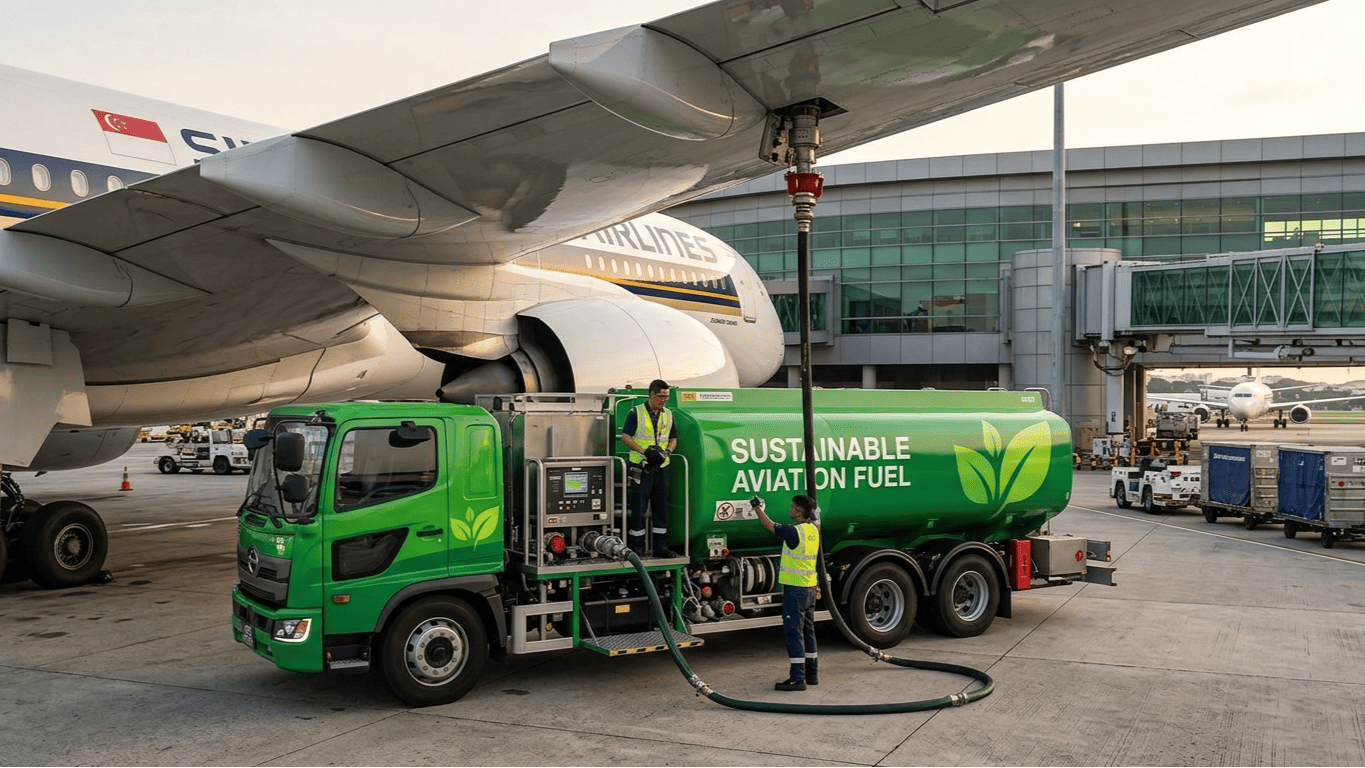
Centralized SAF procurement will reduce lifecycle carbon emissions by up to 80%.
Central Procurement and Industry Impact
Funds raised through ticket sales will be directed into a central SAF Fund overseen by the newly established Singapore Sustainable Aviation Fuel Company Ltd. (SAFCo). Rather than requiring individual airlines to negotiate separate fuel contracts, SAFCo will aggregate demand across all carriers to issue bulk procurement tenders, maximizing purchasing power in a tight global SAF market.
Sustainable aviation fuel can cut lifecycle greenhouse gas emissions by up to 80% compared to conventional jet A-1 fuel. However, global production currently accounts for less than 1% of total jet fuel supply, driving prices significantly higher than fossil fuels.
Aviation analysts note that Singapore's model offers a predictable demand signal for renewable fuel producers. By creating a guaranteed purchasing structure funded directly by passenger volume, the city-state aims to solidify its position as a forward-thinking global aviation hub while avoiding severe price shocks to airline balance sheets.
For more details on global aviation sustainability initiatives, travelers can consult the International Air Transport Association (IATA) net-zero roadmaps or review official passenger guidance at the Changi Airport Group.