Renewable Methanol Trial Marks New Era for Green Cruise Travel
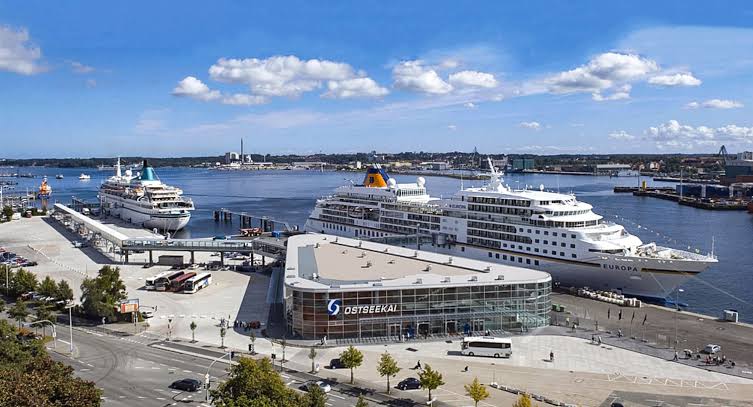
The global maritime sector has reached a critical decarbonization milestone at the Ostseekai Cruise Terminal in Kiel, Germany. TUI Cruises’ Mein Schiff 7—the sector’s pioneer methanol-ready vessel—successfully took on its first supply of green fuel, marking real-world momentum for cruise industry renewable methanol bunkering.
Organized in partnership with MB Energy and transport specialist Johs. Martens, the operation safely delivered 25 cubic meters of certified renewable methanol to the 115,000-gross-ton vessel while passengers were on board.
A Proof-of-Concept for Low-Carbon Operations
While the initial trial utilizes green methanol to power onboard boiler systems rather than main propulsion, the successful transfer serves as a vital proof-of-concept for handling alternative fuels alongside daily passenger operations.
- Operational Integration: The fuel delivery was completed seamlessly at the pier during routine turnarounds, demonstrating system readiness for low-carbon fuels in high-capacity port environments.
- Sustainable Logistics: To ensure end-to-end carbon reduction, the delivery truck itself was powered by HVO 100 biofuel.
- Building Infrastructure: Energy suppliers like MB Energy are scaling up bunker infrastructure across major European hubs like Hamburg and Kiel to support future demand.
The Broader Drive Toward Green Methanol
The cruise industry’s transition toward net-zero emissions is accelerating. While liquefied natural gas (LNG) and bio-LNG served as initial transition fuels, renewable methanol offers a clear path toward near-zero carbon output over its lifecycle.
With major operators—including Norwegian Cruise Line and Disney Cruise Line—exploring methanol-capable builds and retrofits, Mein Schiff 7’s trial establishes a blueprint for future bunkering protocols across global cruise terminals.