
Phuket Vegetarian Festival 2026 Expects 1.4 Billion Baht Economic Boost
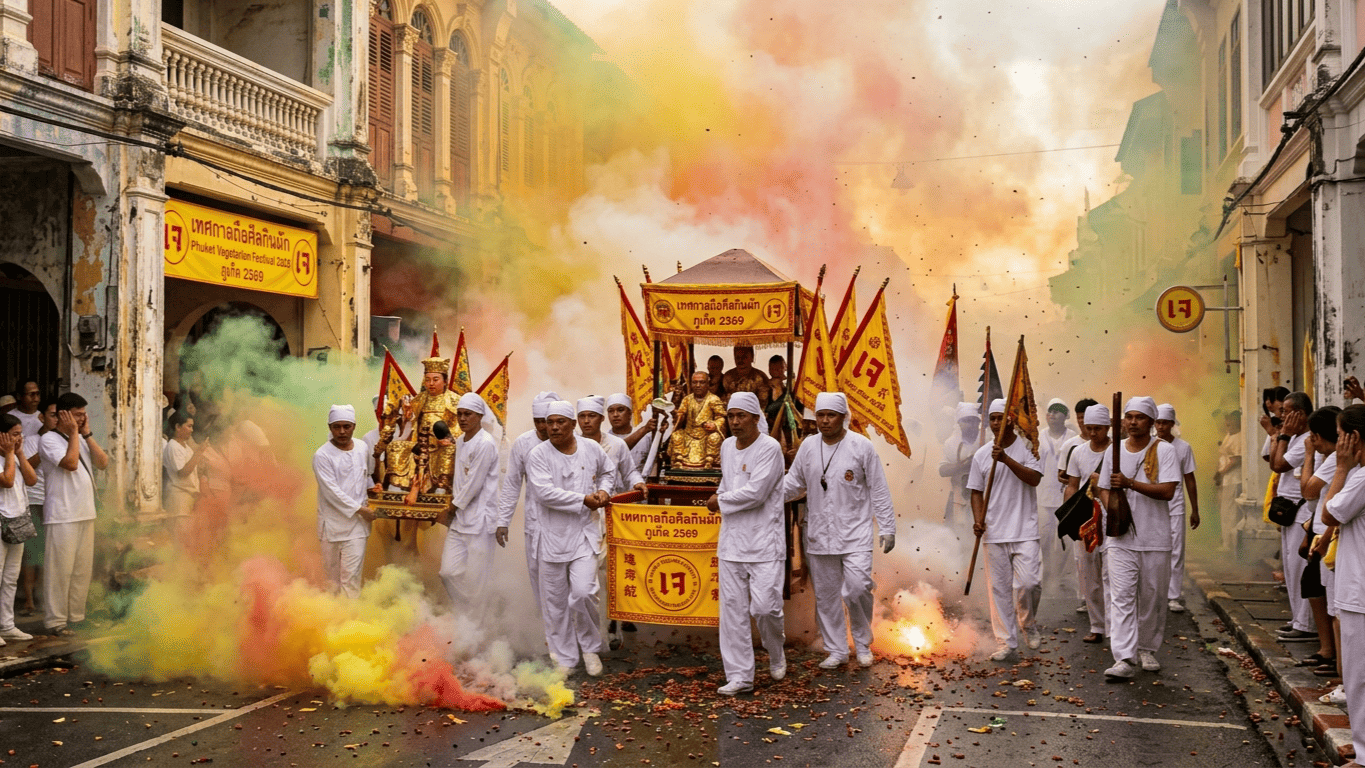
Phuket has officially kicked off its annual Vegetarian Festival (Nine Emperor Gods Festival), transforming Old Phuket Town into a vibrant hub of sacred processions, street rituals, and plant-based gastronomy. Running from October 9 through October 18, 2026, the nine-day event is expected to welcome over 140,000 domestic and international visitors, generating at least 1.4 billion baht for the island's economy.
The festival began on the evening of October 9 with the raising of the traditional Go Teng pole at participating Taoist shrines across the island, signaling the descent of the Nine Emperor Gods into the physical realm.
A New Evening Procession Highlight for 2026
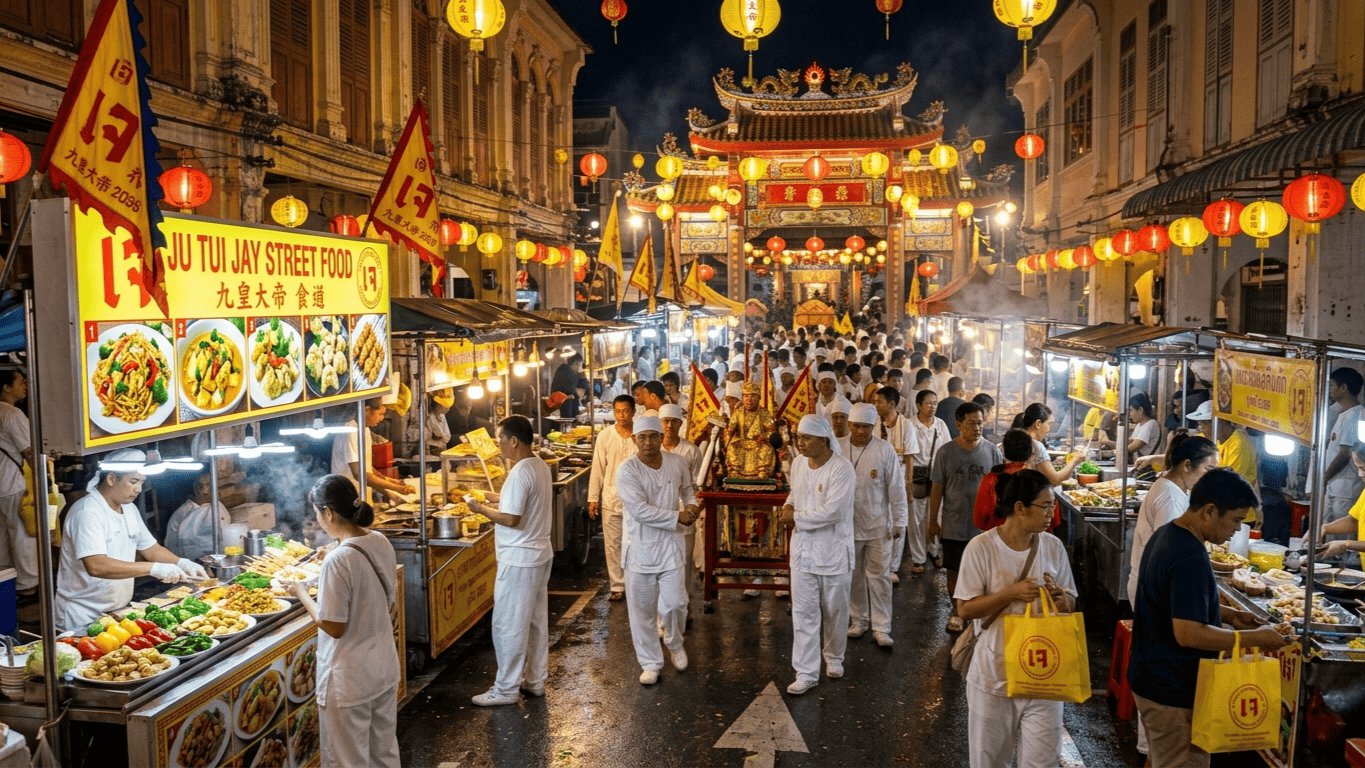
While street processions traditionally take place during early morning hours, local organizers introduced a dedicated nighttime street procession on October 11. This evening route was designed to accommodate higher tourist volumes and provide visitors with a striking visual experience without the intense heat of midday.
Local hotel occupancy across Old Phuket Town and Mueang Phuket district has hit 80% as travelers gather near major shrines including Jui Tui, Bang Neow, and Kathu.
Schedule of Key Events and Rituals
Throughout the festival week, visitors can observe sacred rites, public processions, and evening ceremonies across Phuket Town:
| Date | Major Event / Ritual | Location / Shrine |
| October 9 | Go Teng Pole Raising Ceremony (17:00) | Island-wide Shrines |
| October 11 | Nighttime Special Street Procession | Phuket Town Center |
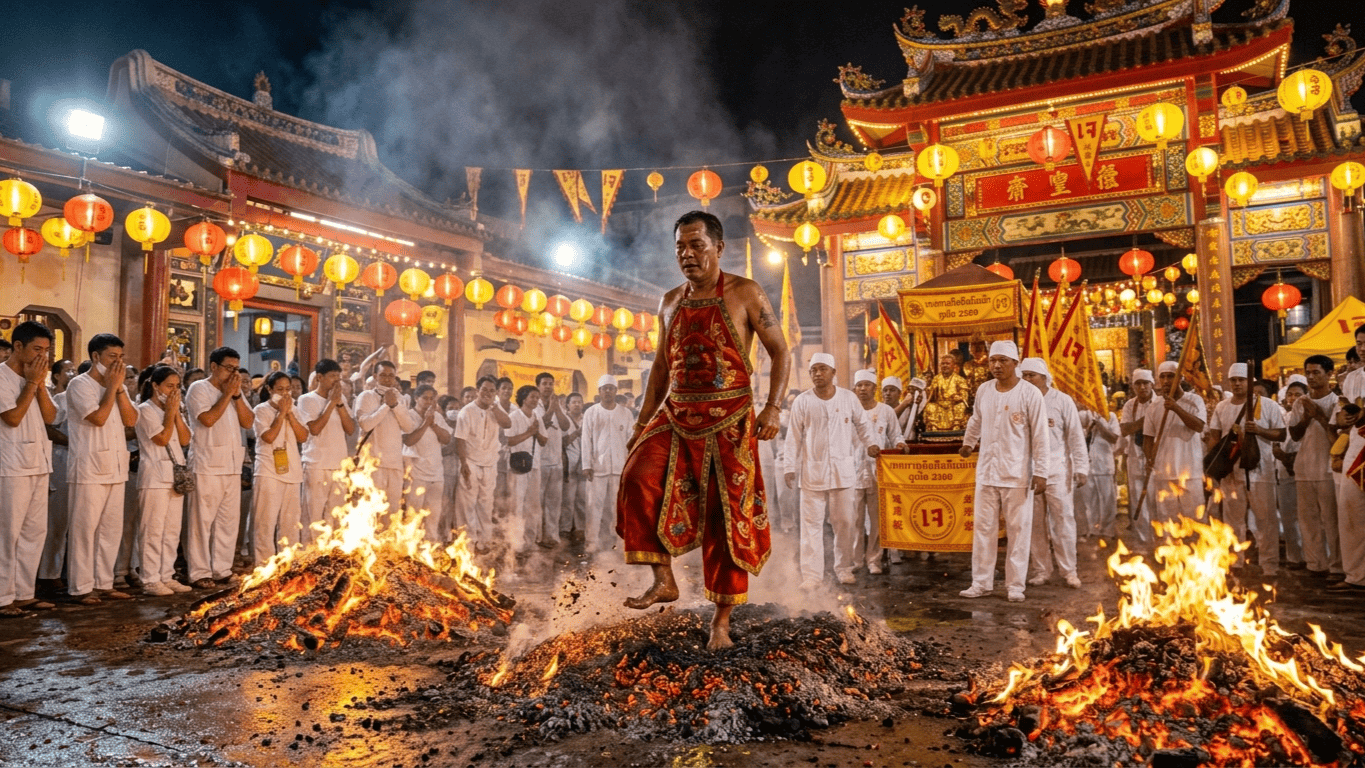
| October 14 | Firewalking Ceremony (Koy Hoi) | Jui Tui Shrine Grounds |
| October 16 | Major Morning Street Procession | Jui Tui Shrine & Ranong Road |
| October 18 | Farewell Procession to Saphan Hin | Saphan Hin Park |
The street processions feature spiritual mediums, known as Mah Song, who undergo trances and ritualistic body piercings as acts of devotion to absorb ill fortune from the community.
Where to Experience "Jay" Street Food
For food enthusiasts, the stretch of Ranong Road leading up to Jui Tui Shrine serves as the heart of the festival’s culinary offerings. Vendors flag their stalls with yellow and red Jay (เจ) banners, selling plant-based versions of local Thai classics, vegetarian skewers, dim sum, and stir-fried noodles cooked strictly according to Taoist dietary rules.
Travelers planning a visit can find official procession maps and shrine schedules via the Tourism Authority of Thailand, while those traveling between the mainland and islands can review ferry links through Phuket Ferry.
Visitor Etiquette and Safety Guidelines
Authorities and shrine organizers urge spectators to observe standard cultural etiquette during procession days:
- Dress Code: Wear clean white clothing when visiting shrine grounds or watching processions.
- Safety Gear: Bring earplugs and protective eyewear when observing street processions due to loud, frequent firecracker detonations.
- Shrine Access: Non-observant visitors and women in late stages of pregnancy are requested to avoid active ritual zones out of respect for tradition.