
Narita Rail Cut and Hundreds of Flights Scrapped as Typhoon Dujuan Hits Japan
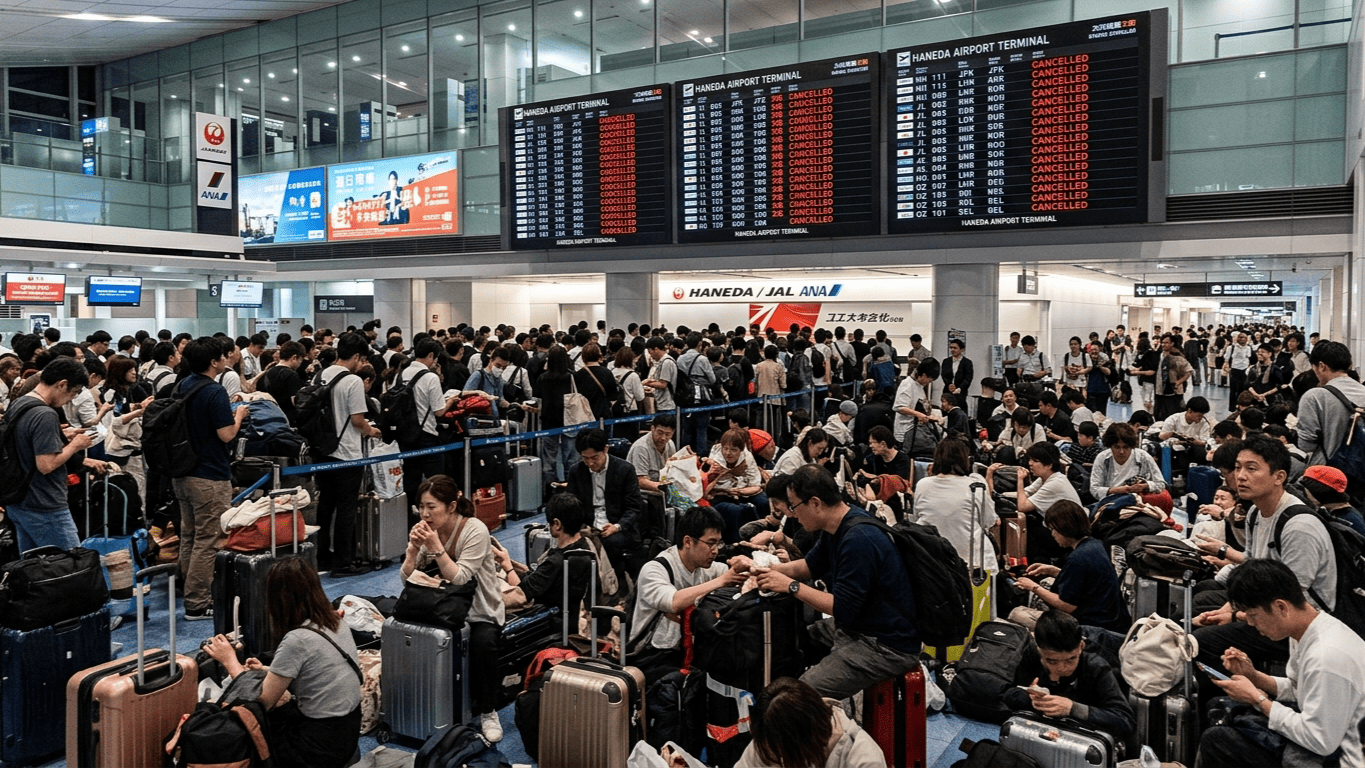
Typhoon Dujuan slammed into eastern Japan, unleashing heavy rainfall, severe flash flooding, and high winds across the Greater Tokyo region. The powerful autumn storm forced the cancellation of hundreds of flights and disrupted regional rail corridors during the nation's busy Silver Week holiday period.
The Japan Meteorological Agency (JMA) issued emergency warnings for landslides and swollen rivers across Tokyo and neighboring prefectures including Chiba, Kanagawa, and Shizuoka. More than 1.6 million residents were placed under non-mandatory evacuation advisories at the height of the storm.
Flights Cancelled and Terminal Hubs Overflowing
Air transport took an immediate hit as Typhoon Dujuan swept near the Kanto coastline with sustained winds reaching 144 km/h. Ground crews and flight controllers at both Haneda Airport and Narita International Airport moved quickly to halt operations during the storm's peak.
- Airlines Scramble Schedules: Major carriers including Japan Airlines and All Nippon Airways scrapped hundreds of domestic and regional flights, leaving thousands of passengers scrambling for alternative bookings.
- Stranded Overnight: At Narita International Airport alone, roughly 2,600 travelers were forced to spend the night inside terminal halls after ground transport out of the airport was severed. Airport operators distributed sleeping bags, water, and emergency food rations to stranded visitors.
While flight operations began a gradual recovery as the storm tracked north, airlines warned that cascading delays and repositioning issues would linger.
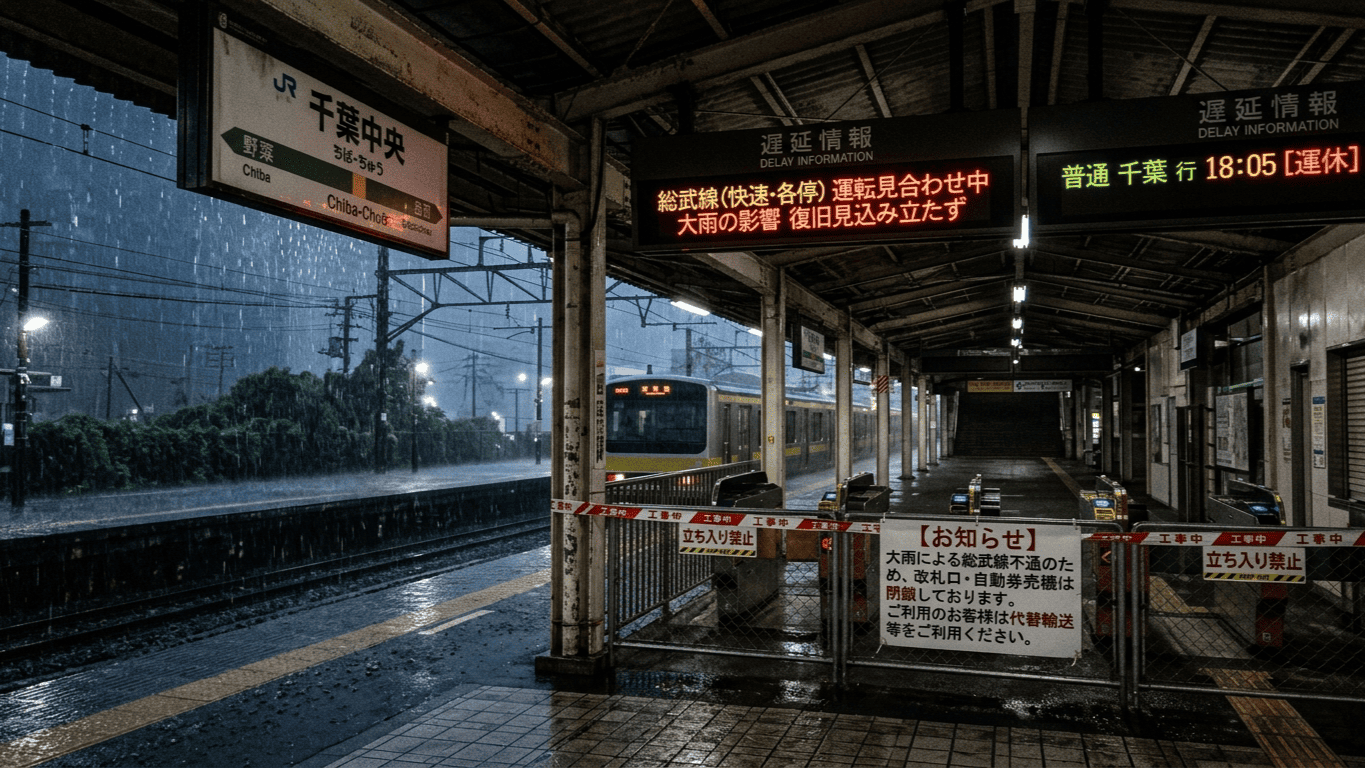
River Flooding Severs Critical Airport Rail Access
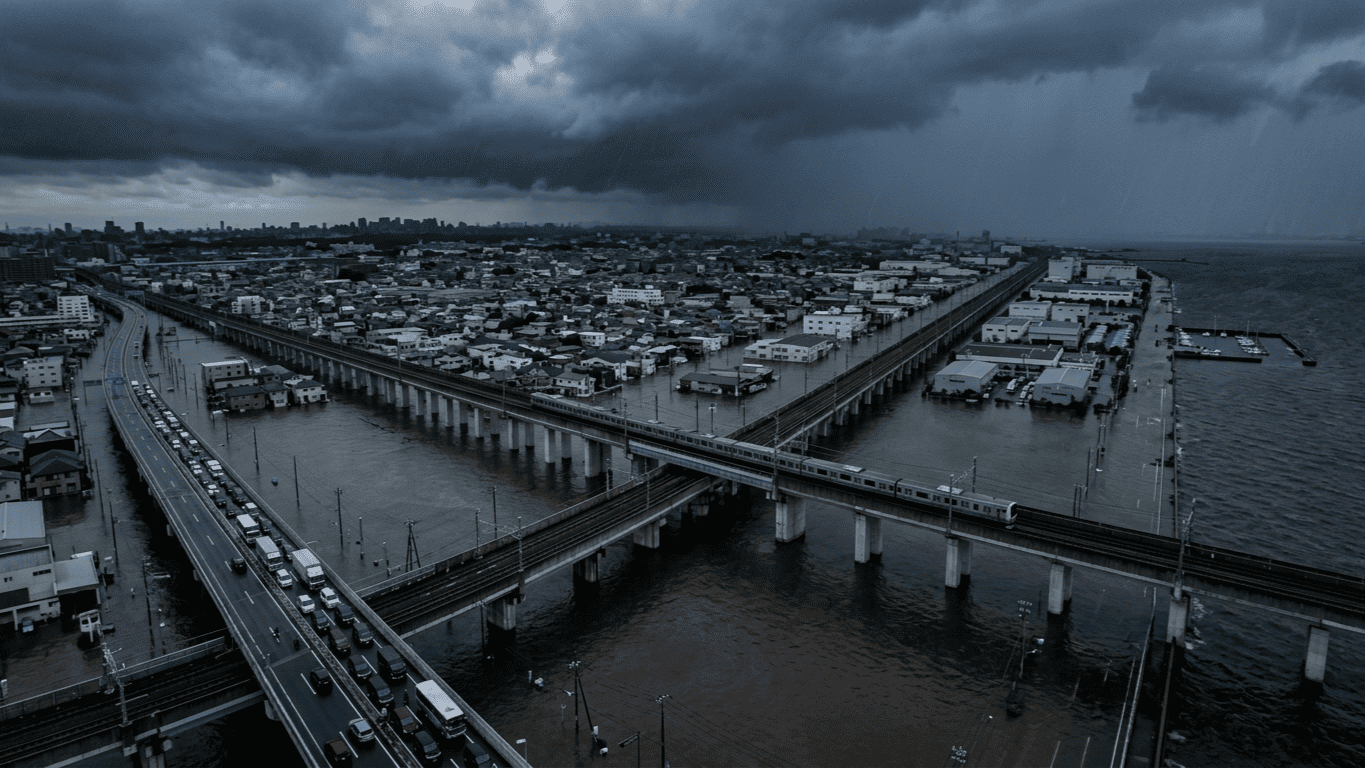
While airlines attempted to restore service, ground transportation faced severe infrastructural setbacks. The Takasaki River flooded near Sakura Station in Chiba Prefecture, inundating key rail segments that connect central Tokyo to Narita Airport.
East Japan Railway Company (JR East) suspended major services along the Sobu Main Line and the Narita Line, halting the primary Narita Express route right at the start of the morning rush.
Local bus operators and taxi routes were also constrained due to flooded highway access corridors and waterlogged local roads. Station officials urged passengers traveling to Narita to verify both their flight status and ground access options prior to leaving central Tokyo.
Public Events Cancelled Across Greater Tokyo
The storm's arrival disrupted public gatherings, economic events, and diplomatic movements across the country:
- Major Trade Events: The final day of the Tokyo Game Show—one of the world's largest video game conventions—was forced into an early closure.
- Outdoor Sports & Festivals: Outdoor music festivals, professional baseball games in Chiba, and equestrian events associated with regional sports competitions were postponed or cancelled.
- Government Travel: Prime Minister Sanae Takaichi’s departure for New York to attend the United Nations General Assembly was delayed by several hours as weather conditions kept diplomatic aircraft grounded.
Authorities continue to urge residents and tourists to monitor official updates on the Japan Meteorological Agency portal for ongoing landslide warnings and local transportation advisories as recovery operations progress.
Important Checklist for Travelers in Japan
- Check Flight Status First: Reconfirm flight departures with your air carrier before heading out.
- Verify Ground Access: Do not assume trains or highway express buses are running even if flights are operational.
- Allow Extra Time: Leave significantly earlier than usual when heading toward major hubs like Narita or Haneda.