Middle East Tourism Sinks in 2026 As Global Travel Surges Ahead

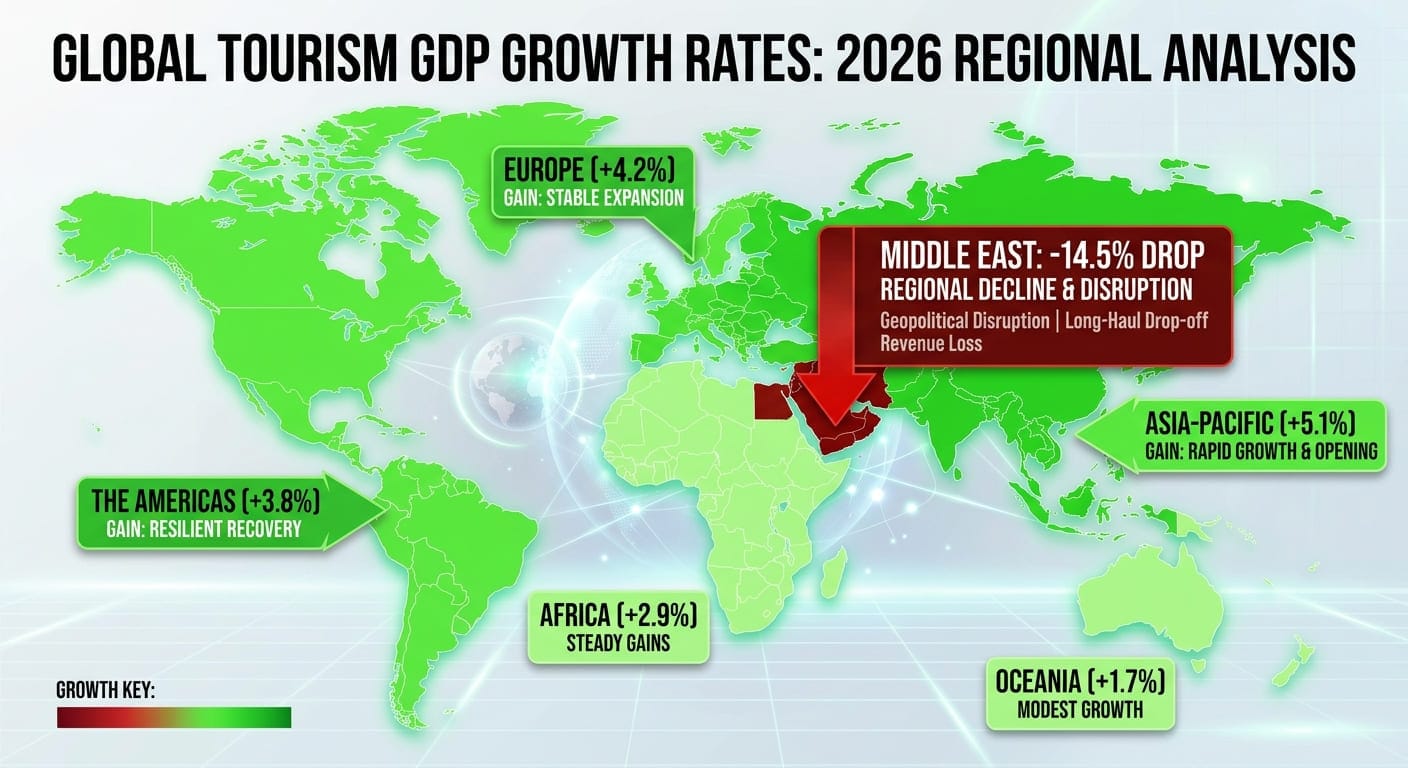
While global travel demand continues its post-pandemic expansion, the Middle East is facing a difficult year. According to the latest Economic Impact Research from the World Travel & Tourism Council (WTTC), the Middle East is projected to be the only region worldwide to record a contraction in Travel & Tourism GDP in 2026, with sector GDP expected to drop by 14.5% to $330 billion.
Quarterly data released by UN Tourism shows that international tourist arrivals across the region fell 14% in early 2026. Geopolitical instability, airspace closures, and shifting travel corridors have created headwinds for major transit hubs and leisure destinations.
Airspace Disruptions and Regional Economic Impacts
The downturn highlights the region's position as a hub for international long-haul travel, with Middle Eastern airports traditionally handling around 14% of global international passenger transfers.
- Transit Hub Squeeze: Temporary flight reroutings and safety concerns have disrupted passenger throughput at key hubs like Dubai International Airport, Hamad International Airport, and Zayed International Airport.
- Long-Haul Drop-Off: Analysis by Oxford Economics indicates inbound arrivals to the region could fall between 11% and 27% for the full year 2026, resulting in an estimated visitor spending loss ranging from $34 billion to $56 billion.
- Divergent Growth Story: While European (+4%) and African (+4%) destinations posted steady growth, Middle Eastern destinations saw long-haul international visitors cancel or redirect trips to Western Europe and North Africa.
Long-Term Resilience and Infrastructure Horizon
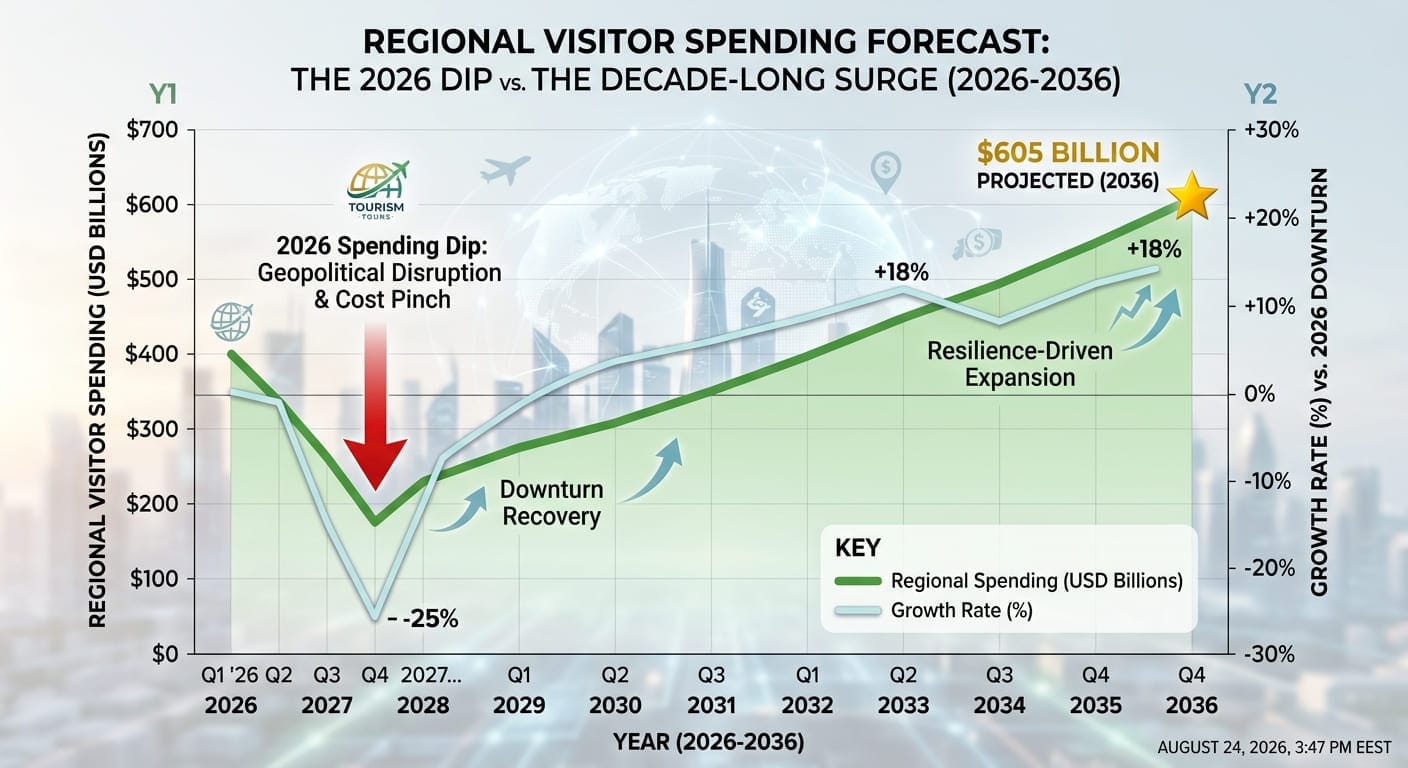
Despite the 2026 headwinds, industry analysts emphasize the sector's long-term strength. Heavy capital investments under Saudi Arabia’s Vision 2030 and continued luxury infrastructure expansion across the UAE, Qatar, and Oman position the Middle East to be the world's fastest-growing tourism region between 2026 and 2036, with sector GDP projected to reach $605 billion over the next decade.