Korean Carriers Expand China Routes as Travel Rebound Reaches Regional Cities
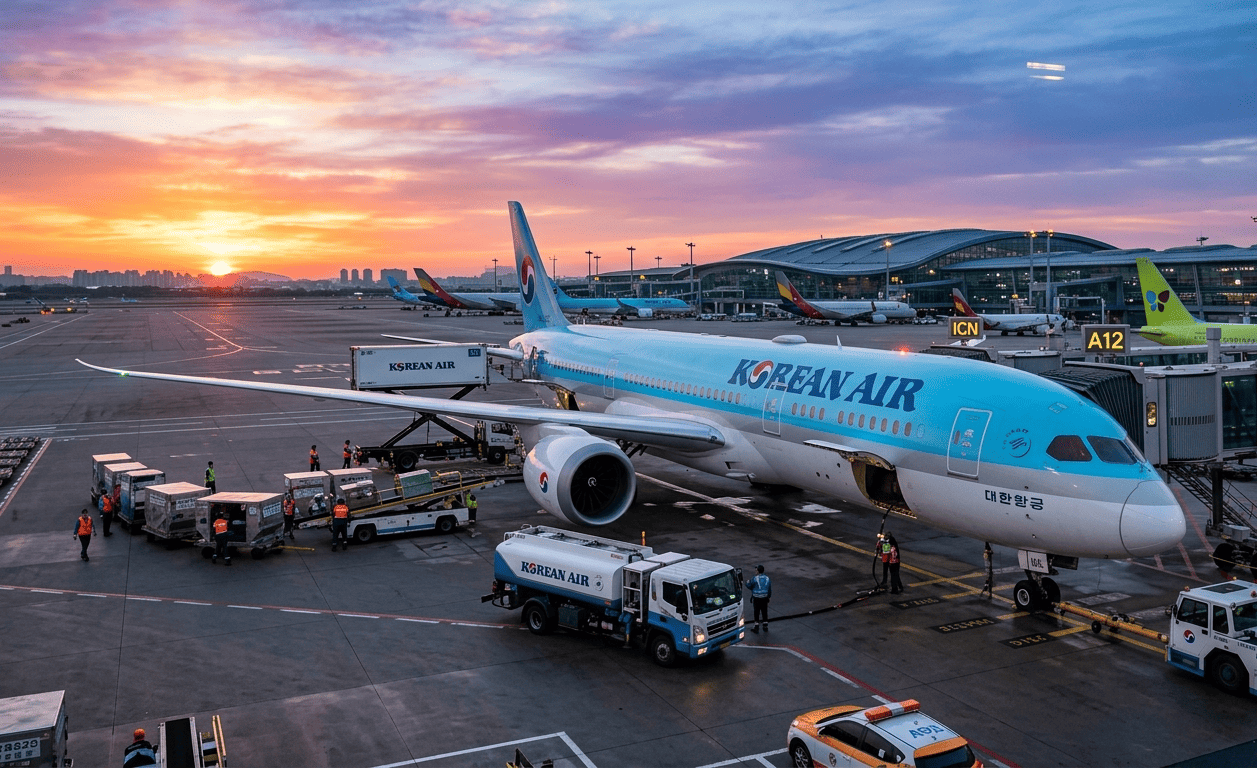
South Korean airlines are pushing their regional route networks deeper into China, moving beyond traditional business hubs like Beijing and Shanghai to capture booming demand across leisure destinations and provincial economic centers.
Data from the Ministry of Land, Infrastructure and Transport shows passenger traffic on routes between South Korea and China reached 9.54 million in the first half of the year, representing a 22 percent year-over-year increase. The surge has encouraged both legacy carriers and low-cost operators to reinstate suspended routes and launch new services linking regional Korean airports with secondary Chinese markets.
The expansion follows a bilateral aviation rights agreement that raised the weekly passenger flight cap between the two nations from 608 to 664 services, reserving specific allocations for regional airport corridors.
Expanding Networks Beyond Capital Hubs
While full-service giants Korean Air and Asiana Airlines continue to increase frequencies on core routes to Dalian, Tianjin, and Chengdu, budget carriers are leading the charge into regional tourist gateways.
- Jin Air: Launching new direct flights between Seoul Incheon and Yichang, alongside restored connections to Qingdao and Yantai.
- Eastar Jet: Opening a direct route connecting Daegu to the scenic mountain hub of Zhangjiajie, supplemented by charter operations to Datong, Nantong, and Ningbo.
- Asiana Airlines: Ramping up weekly China services by more than 20 percent, boosting seat capacity on high-demand cultural routes to Chengdu and Chongqing using modern Airbus A321neo aircraft.
Visa Policy and Tourism Momentum
The network expansion is receiving a strong tailwind from favorable visa policies. China's extension of visa-free entry for South Korean travelers, paired with streamlined group visa processing for Chinese visitors entering South Korea, has significantly eased cross-border travel barriers.
According to stats compiled by the Korea Tourism Organization, Chinese visitor arrivals to South Korea climbed 27.1 percent to 3.21 million during the first half of the year. Traffic through regional Korean airports like Gimhae, Daegu, and Cheongju grew at an even faster pace, jumping over 42 percent in recent months.
Industry analysts note that while increased flight capacity may trigger short-term fare competition on saturated Seoul-to-Beijing routes, direct regional links offer sustainable long-term revenue streams for airlines targeting both leisure tourists and expanding trade ties.