
How Europe Claims Over 80 Percent of the World’s Green Destinations
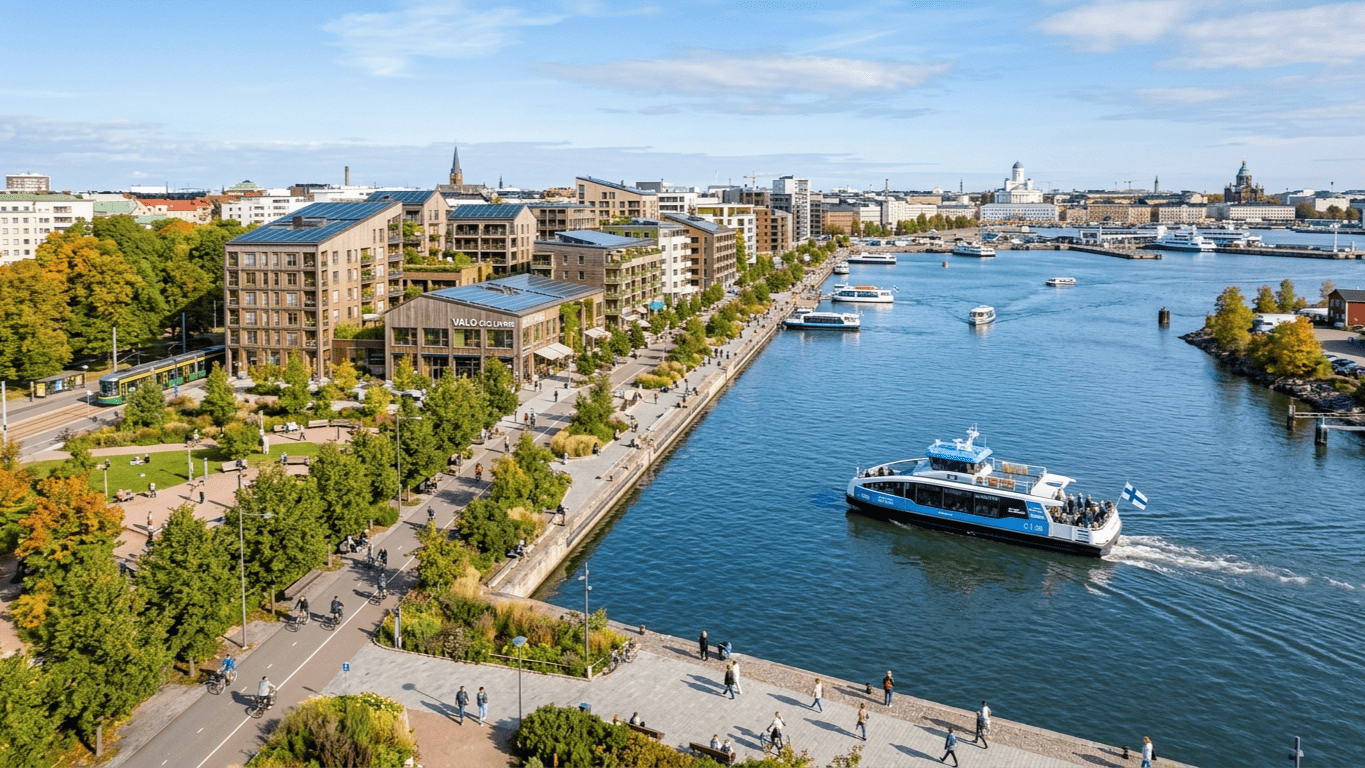
Europe continues its dominant run in sustainable tourism, sweeping over 80 percent of the top spots in the latest global sustainability benchmarks. According to the newly released 2026 Global Destination Sustainability Index (GDS-Index) "Spark to Scale" report, the Finnish capital of Helsinki has secured the world’s top spot for the third consecutive year, scoring an unprecedented 92.94% overall.
The annual index—now in its 11th year—evaluates destinations worldwide across environmental performance, social progress, supplier industry standards, and destination management strategies. The 2026 results reflect a major shift across the global travel sector: destination management is moving away from basic eco-friendly pledge campaigns toward strict accountability, certified supply chains, and measurable climate action plans.
Nordic Leadership Sets the Global Standard
Nordic cities swept the top five positions in the 2026 rankings, driven by aggressive decarbonization goals and comprehensive municipal integration:
- Helsinki, Finland (92.94%): Recognized for its citywide carbon-neutral strategy, total transparency in hotel eco-certification, and seamless electric public transit networks.
- Gothenburg, Sweden (91.29%): A perennial leader known for pioneering circular economy initiatives across its hospitality sector and integrated regional rail connections.
- Copenhagen, Denmark (90.35%): Continues to set global benchmarks with its zero-emission transport network and community-driven waste management systems.
- Aarhus, Denmark (90.12%): Earned high marks for sustainable food systems and urban greening initiatives.
- Aalborg, Denmark (88.24%): Rounding out the top five with exceptional scores in renewable energy integration and local community involvement.
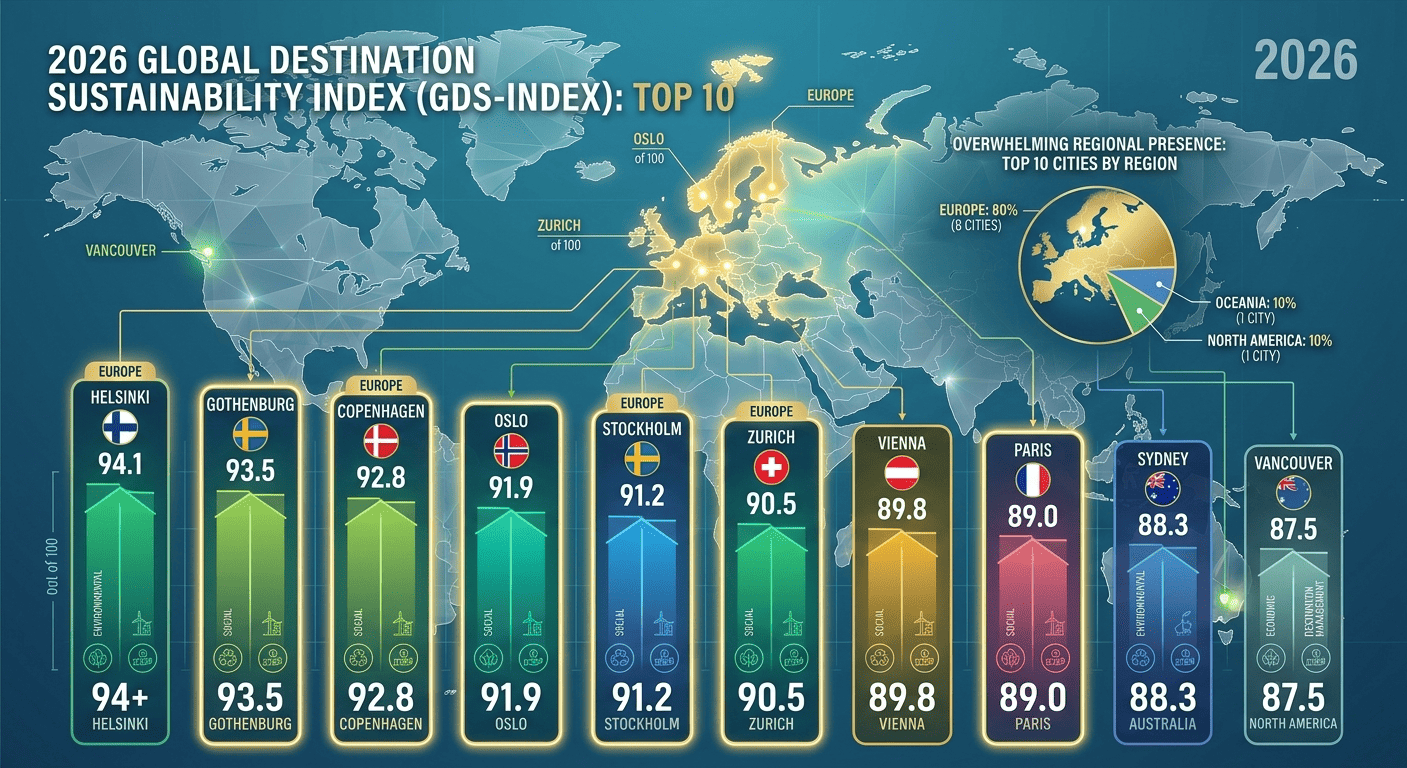
"What we are seeing in 2026 is that sustainable tourism is no longer a luxury add-on or a niche marketing angle," said target researchers analyzing the 2026 GDS-Movement benchmarking dataset. "It is becoming the fundamental operating model for urban tourism boards. Cities like Helsinki and Gothenburg aren't just protecting their natural surroundings; they are actively improving the quality of life for residents while hosting visitors."
Europe Dominates, but Global Progress Accelerates
While European destinations accounted for 33 of the top 40 spots in the global index, non-European cities made notable strides in 2026. Sydney, Australia, climbed into 7th place overall with a score of 87.06%, sharing the position with Belfast, Northern Ireland. Montreal, Canada, placed 9th globally (86.59%), earning top honors for its strategic destination management and green event hosting. Goyang, South Korea and Sapporo, Japan led performance across Asia.
Overall, 89 percent of returning destinations improved their benchmark performance compared to last year, narrowing the gap between the top 10 cities and the rest of the global pack to its lowest point since tracking began in 2016.
To explore how these leading cities compare across specific sustainability pillars, use the interactive index breakdown below.

Shift Toward Regenerative Travel
The 2026 data reflects broader global movement toward regenerative travel—an approach focused on restoring ecosystems and directly supporting local economies rather than merely minimizing damage.
Beyond large metropolitan areas, regional programs like the Green Destinations Top 100 recognized rural communities, island territories, and national parks implementing strict conservation models. Countries such as Costa Rica, Bhutan, and New Zealand continue to set benchmarks for natural resource management through direct visitor caps, sustainable development fees, and protected corridor networks.
For detailed regional breakdowns and full methodology, consult the official GDS-Movement 2026 Report.