
East African Trio Weigh Joint Tourist Visa to Supercharge AFCON 2027 Fan Travel

Football supporters and international tourists traveling across East Africa could soon move seamlessly between stadium gates and national parks under a single travel pass. Kenya, Tanzania, and Uganda—the co-hosts of the 2027 Africa Cup of Nations (AFCON)—are actively developing a joint visa framework designed to streamline cross-border movement throughout the marquee continental tournament.
Announced during recent East African Community (EAC) Ministerial discussions, the proposal seeks to create a unified entry scheme tailored for supporters, media personnel, and international visitors. If fully implemented, the special arrangement will allow fans attending matches across Nairobi, Dar es Salaam, Arusha, and Kampala to cross borders without navigating separate, costly visa procedures at every stop.
Bridging the Gap in East African Tourism
While Kenya and Uganda have operated a shared regional travel pass alongside Rwanda under the East Africa Tourist Visa (EATV) since 2014, Tanzania has historically remained outside the joint framework due to independent revenue and border management policies.

The high-stakes arrival of AFCON 2027—often dubbed the "Pamoja Bid" after the Swahili word for "together"—has provided the political impetus needed to align border protocols. By bringing Tanzania into a temporary or permanent shared visa fold alongside Kenya and Uganda, regional leaders hope to distribute tourism revenue far beyond host cities.
Beyond the pitch, match-goers will be encouraged to explore world-famous attractions ranging from the Serengeti and Maasai Mara to the shores of Lake Victoria and the beaches of Zanzibar.
To review current entry prerequisites, visa fees, and eligibility details for existing regional passes, travelers can access the official East African Community Portal for institutional updates.
Unlocking Multi-Billion Dollar Economic Potential
Hospitality providers, tour operators, and regional airlines stand to gain immensely from a unified travel mechanism. During peak tournament schedules, supporters routinely follow their national teams as group stages transition to knockout rounds across different host countries.
Without streamlined entry protocols, travel friction risks keeping fans confined to a single country. Tourism trade bodies emphasize that a single visa will encourage longer stays, boost domestic flight bookings, and increase occupancy rates across regional hotel chains.
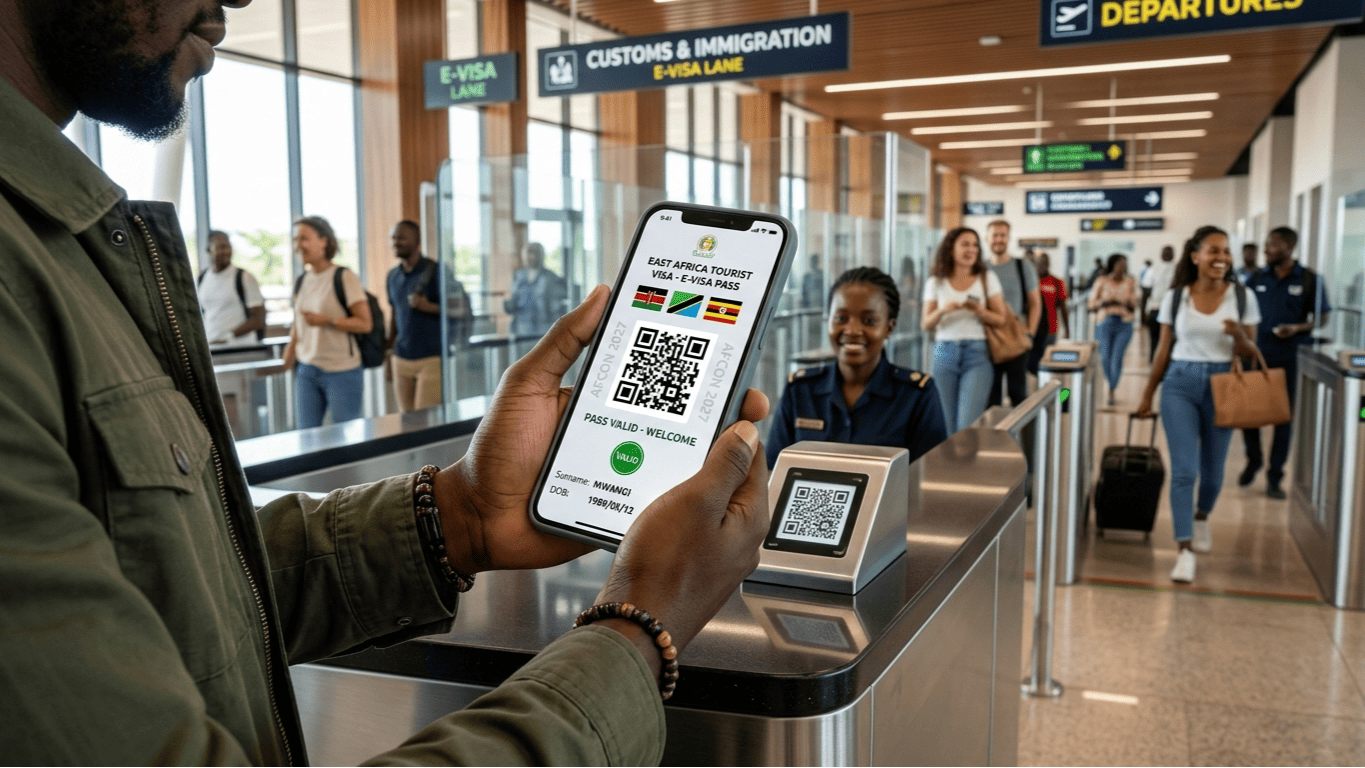
Ministers within the bloc have accelerated technical studies to evaluate border infrastructure, shared revenue collection mechanisms, and biometric database integration ahead of the 2027 deadline.
For comprehensive travel safety advisories, health guidelines, and destination preparation tips across Sub-Saharan Africa, international visitors can consult the U.S. Department of State International Travel guidelines.
Will the Tournament Visa Become Permanent?
The core question for tourism analysts is whether this tournament-driven arrangement will serve as a permanent template for regional integration.
With the EAC targeting 11 million annual tourist arrivals, industry stakeholders are urging governments to retain the shared visa framework permanently once the trophy is lifted. Doing so would place East Africa on par with competitive multi-state travel blocs worldwide, turning a temporary sports event into a lasting catalyst for economic growth.