
Beyond Oil: How Oman’s $51 Billion Tourism Investment Plan is Transforming the Gulf
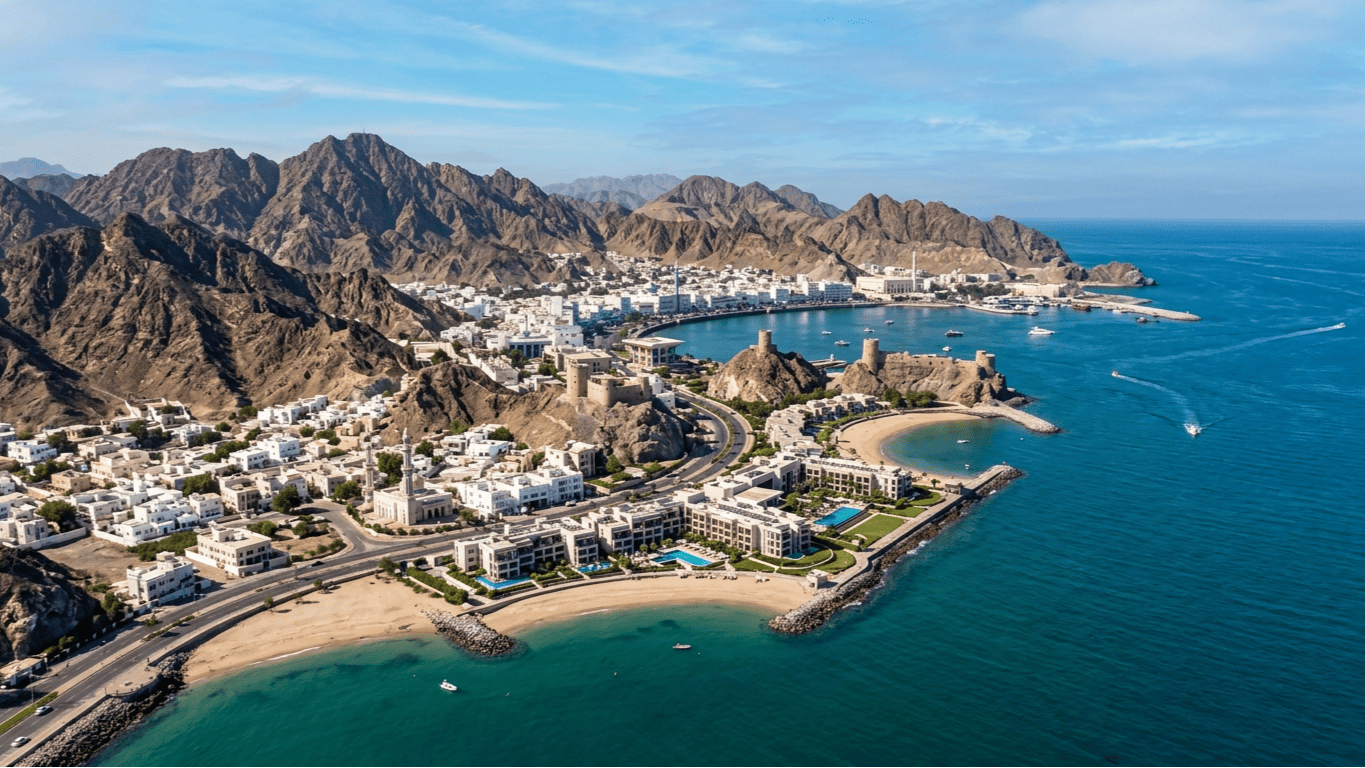
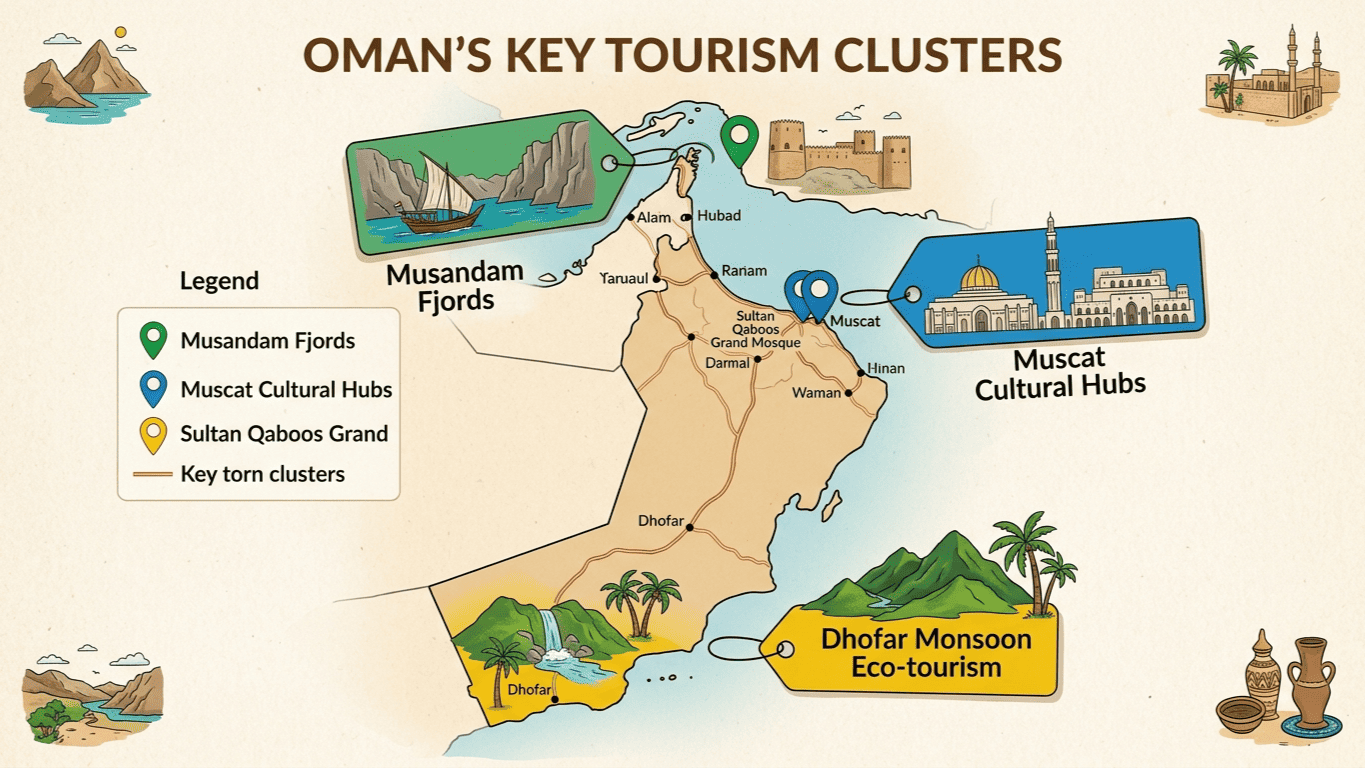
While much of the Gulf region has long competed for the world's tallest skyscrapers and mega-theme parks, the Sultanate of Oman is playing a distinctly different game. Driven by the ambitious goals of Oman Vision 2040, the nation is executing a sweeping $51 billion national tourism investment blueprint designed to position the country as the premier eco-luxury and cultural capital of the Middle East.
The capital injection—expected to draw up to 90% of its funding from private equity and international investors—aims to transform tourism into a dominant engine of non-oil economic growth. By the end of the strategic period, Oman projects the sector will contribute over $22.5 billion (OR 9 billion) annually to GDP, expanding the country’s visitor count to nearly 12 million international travelers per year.
A Blueprint Built on Distinct Strategic Clusters
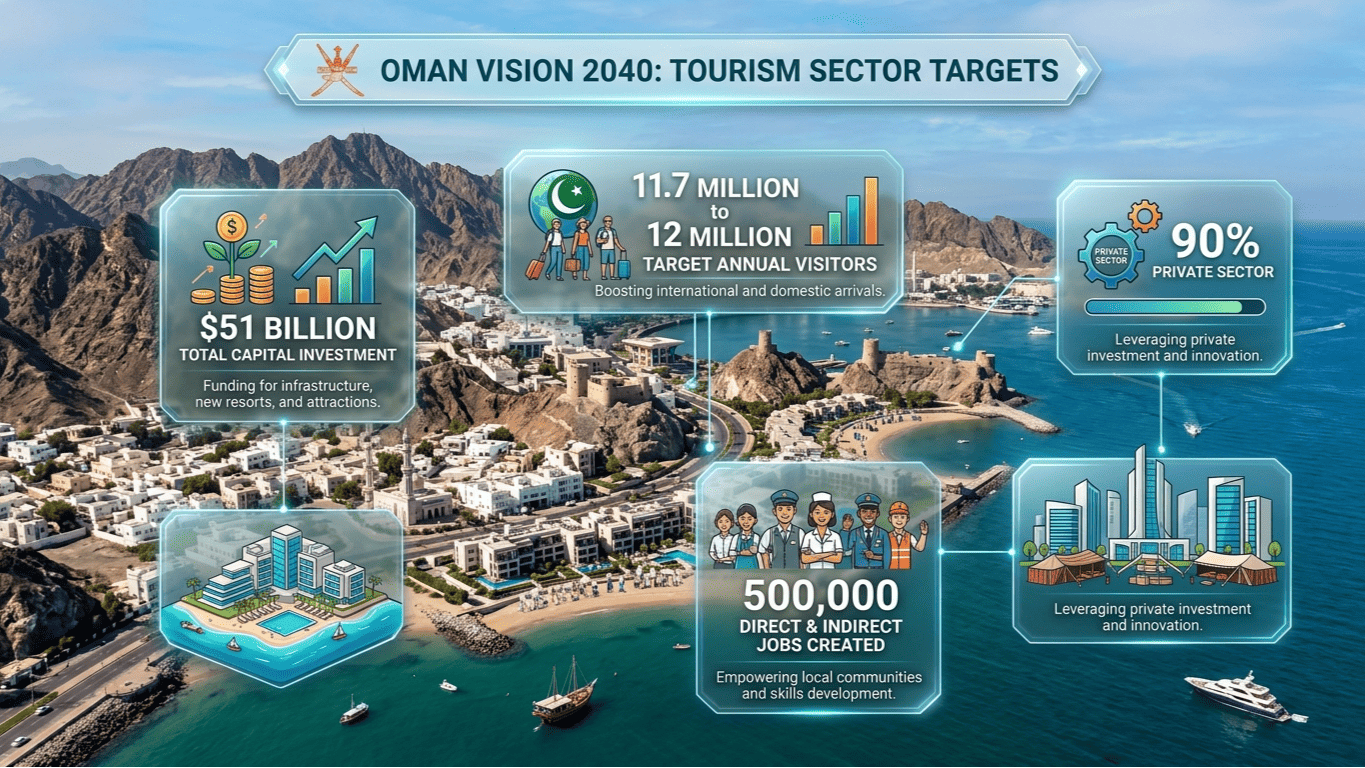
Unlike centralized investment initiatives, Oman’s plan relies on a localized cluster model. The Ministry of Heritage and Tourism has identified 14 distinct regional hubs designed to showcase the country's varied topography.
Developments stretch across more than 3,000 kilometers of coastline, ranging from adventure sports in the rugged Al Hajar range to wellness retreats along the pristine shores of Musandam and eco-lodges tailored to Dhofar’s unique Khareef monsoon season.
Major global hospitality operators are already moving into position. Luxury brands have expanded their footprint across the capital and key coastal pockets, while public-private partnerships focus on developing secondary cities, historical fort restorations, and nature reserves.
To support this rapid physical expansion, national carrier Oman Air has aligned its fleet trajectory with the broader tourism vision, expanding direct routes to high-growth markets across Europe and Asia.
Diversification and the Private Sector Drive
The underlying driver behind the $51 billion commit is urgency. Like its neighbors in the Gulf Cooperation Council (GCC), Oman is actively diversifying away from hydrocarbon reliance. Tourism offers a natural hedge: it generates foreign exchange, encourages real estate development, and provides immediate employment opportunities.
Officials anticipate the strategy will create roughly 500,000 new direct and indirect jobs by 2040, giving a significant boost to young Omani professionals entering the workforce. Vocational training academies are already retooling curricula to focus on hotel management, sustainable tour operations, and regional heritage preservation.