
Best Europe eSIMs for 2026: Cost, Coverage, and Setup Guide
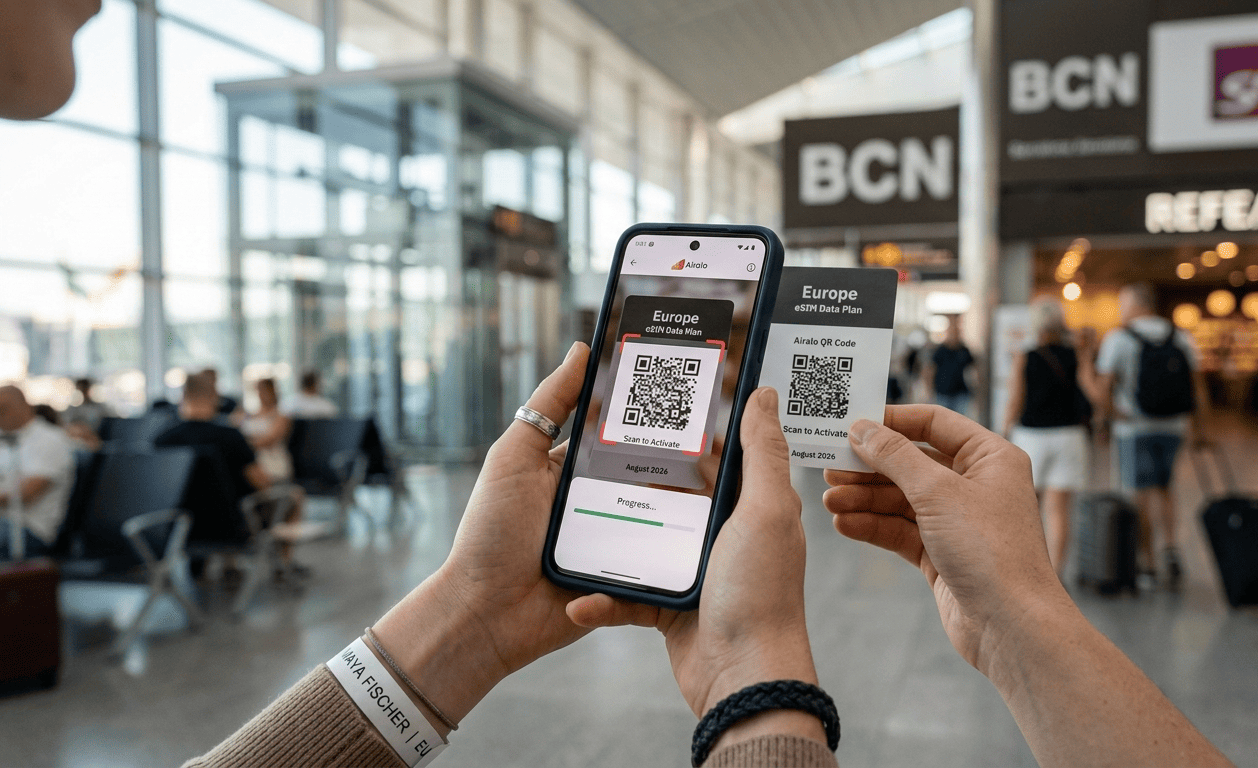
There’s a specific kind of travel friction every international visitor knows all too well: landing at a bustling European hub like Charles de Gaulle or Frankfurt, queueing at an airport telecom kiosk after a overnight flight, and attempting to swap microscopic SIM cards with a paperclip while juggling your carry-on.
Fortunately, that era is officially over.
The widespread adoption of embedded SIM (eSIM) technology has transformed European travel. Instead of paying $10 to $15 per day in exorbitant international roaming fees or collecting a graveyard of plastic SIM cards across borders, you can now configure continent-wide cellular coverage on your smartphone in minutes before you even pack your bags.
Here is everything you need to know about using a travel eSIM across Europe, how multi-country coverage works, and how to pick the right data setup for your itinerary.
1. Why Travel eSIMs Transformed European Trips
When traveling across European borders—whether taking the Eurostar from London to Paris or driving from Munich into the Austrian Alps—maintaining continuous data access is essential for real-time translation, transit apps, and contact tracing.
While residents of the European Economic Area enjoy "Roam Like at Home" privileges, non-EU visitors using their domestic carrier’s international pass face hefty daily surcharges.
A travel eSIM provides a dedicated digital data profile downloaded directly to your phone's internal chip. Key advantages include:
- Instant Digital Delivery: Purchase your plan online and receive a QR code or direct app activation link instantly.
- Dual-SIM Flexibility: Keep your physical SIM active in your device to receive essential two-factor authentication SMS messages from your bank while using the eSIM for affordable high-speed data.
- Borderless Connectivity: A single regional European eSIM automatically connects to local partner networks (like Vodafone, Orange, or Deutsche Telekom) as soon as you cross international borders.
For detailed industry research on device compatibility and global adoption trends, explore the GSMA Intelligence eSIM Report.
2. EU Roaming Rules vs. Multi-Country Regional eSIMs
Understanding how network coverage functions across European countries helps prevent unexpected dead zones:
- EU/EEA Member States: Under official European Union guidelines, mobile connectivity seamlessly spans 27 EU member countries plus Norway, Iceland, and Liechtenstein. Read more about consumer protections directly on the official European Union Mobile Roaming Portal.
- Non-EU Destination Coverage: Popular destinations like the United Kingdom, Switzerland, Turkey, and Western Balkan nations lie outside the official EU roaming umbrella.
Pro-Tip for Travelers: Always check the specific country list of your regional European eSIM before buying. Most top providers include the UK and Switzerland in their regional "Europe" packages, but coverage in non-EU countries like Turkey or Albania often requires an expanded regional plan.

3. Selecting the Right eSIM Provider for Your Travel Style
Not all travel eSIMs are built the same. Your ideal choice depends on how long you are traveling and how heavily you rely on mobile data:
- For Fixed Data & Budget Travelers: Providers like Airalo offer regional European bundles starting around $5 to $8 for basic 1GB–3GB packages. These are ideal for light browsers who rely on hotel Wi-Fi for heavy downloads.
- For Heavy Streamers & Remote Workers: Facilitators like Holafly focus on unlimited data packages across Europe, eliminating overage anxiety for digital nomads and travelers running navigation apps all day.
- For Local Calling Capabilities: Most travel eSIMs are data-only. However, services like Sim Local provide options that include local European phone numbers and voice minutes, which come in handy for making restaurant reservations or calling tour operators.
4. Setup Guide: Avoiding Common Setup Errors
To ensure a stress-free setup on arrival day, follow these three practical guidelines:
- Install Before Departure: Download and install your eSIM profile while connected to your home Wi-Fi prior to boarding your flight.
- Keep Data Roaming ON for the eSIM: Ensure "Data Roaming" is toggled ON for your secondary travel eSIM line, but keep it OFF for your primary home carrier line to avoid surprise charges.
- Download Offline Maps: Download offline region maps on Google Maps or Apple Maps before taking off as an added safety net while your phone searches for local tower handshakes upon landing.