American Airlines Flight Returns Safely After Bird Strike Flames Engine
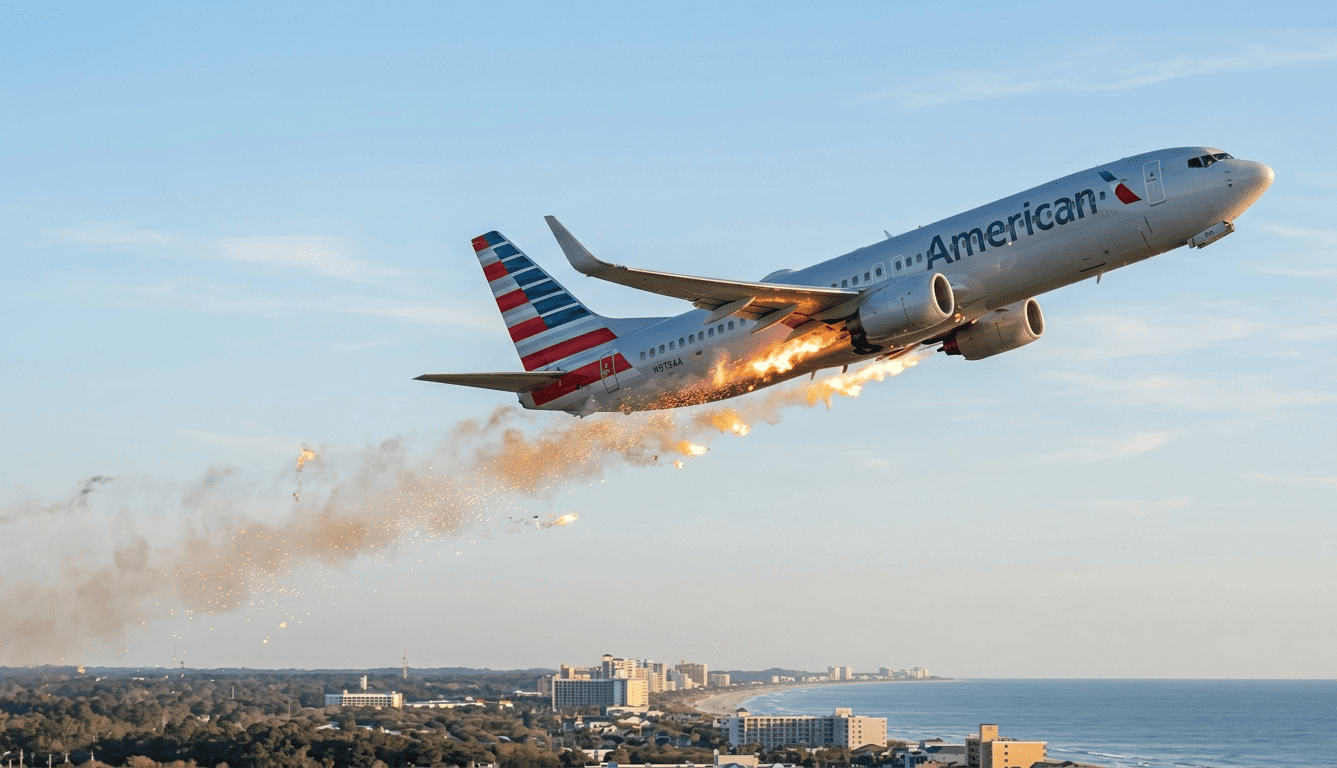
An American Airlines flight bound for Charlotte, North Carolina, was forced to make an emergency landing after striking a bird shortly after takeoff, causing flames to shoot from one of its engines.
Flight 1760, operated on a Boeing 737 carrying 172 passengers and nine crew members, departed Myrtle Beach International Airport around 8:40 a.m. local time. Shortly into the climb, the aircraft suffered a bird strike to its left engine, sparking loud bangs and visible flames captured on video by passengers on board and onlookers on the ground.
"Mayday" Call Issued Following Engine Disturbance
Air traffic control audio recordings captured the pilot declaring an emergency moments after departure.
"Mayday, mayday, mayday, we got an engine problem here," the pilot reported, requesting an immediate vector to return to the airport.
Passengers reported hearing a series of heavy thuds, followed by noticeable vibration throughout the cabin. Video footage shot from window seats showed bursts of flames pulsing from the engine housing.
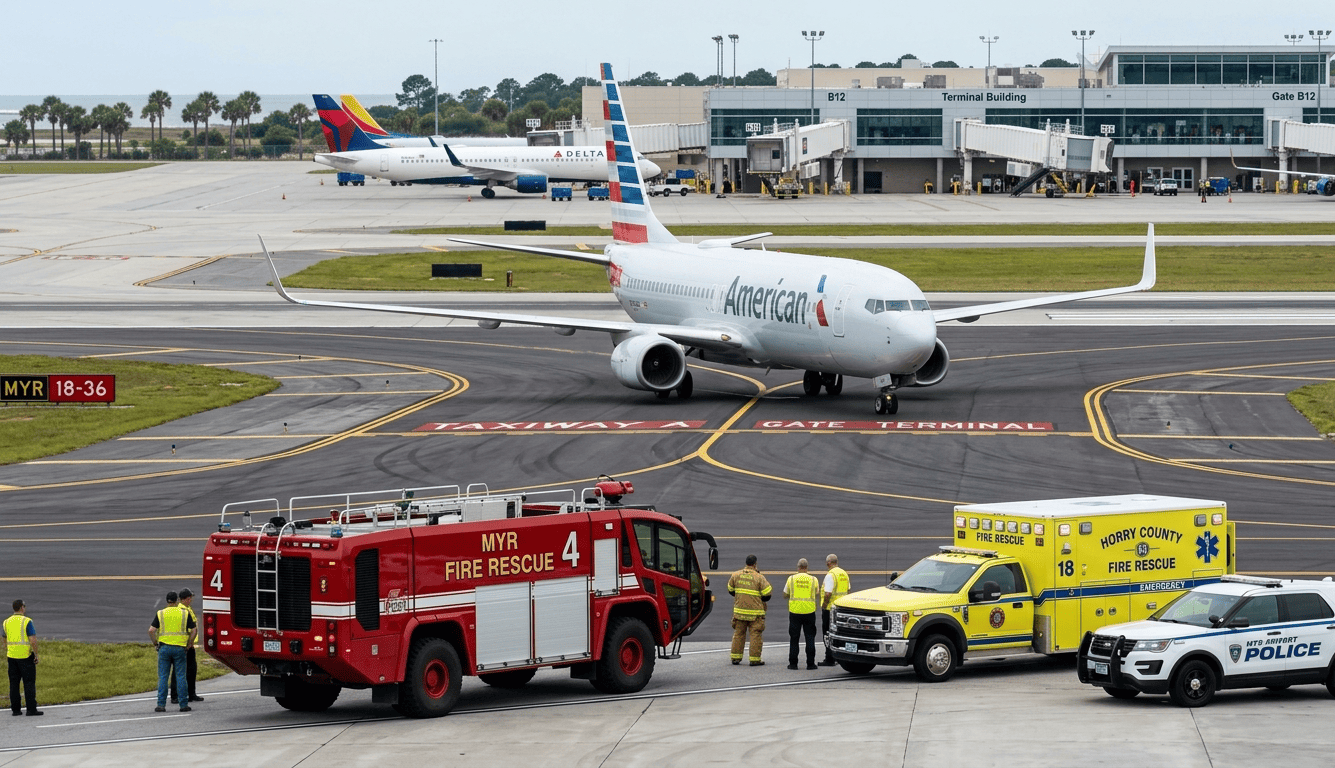
The flight crew followed standard emergency procedures, shutting down or idling the affected engine while executing a safe turn back toward Myrtle Beach. The aircraft landed without further incident roughly 30 minutes after departure, taxiing to the gate under its own power. Emergency response vehicles met the plane on the taxiway as a precaution, but no injuries were reported among the 181 people on board.
Post-Flight Inspections and Runway Cleanup
Following the landing, airport operations personnel conducted a sweep of the active runway, recovering significant bird debris and feathers.
American Airlines officially removed the Boeing 737 from service to allow maintenance crews to inspect the internal compressor blades and engine housing for structural damage. The airline arranged a replacement aircraft to transfer the affected passengers to Charlotte Douglas International Airport later in the day.
While visible flames from jet engines often cause alarm, modern commercial airliners are engineered to operate safely on a single engine, and pilots undergo rigorous simulator training to handle engine compressor stalls caused by foreign object ingestion.
Official details and regulatory oversight for civil aviation safety can be referenced on the Federal Aviation Administration (FAA) website. Historical trends, reporting guidelines, and airport wildlife management metrics are maintained in the FAA Wildlife Strike Database. For official company statements and operational updates regarding Flight 1760, check the American Airlines Newsroom.